Claims vs evidence
FemiCore Benefits: The Three Label Claims, Explained
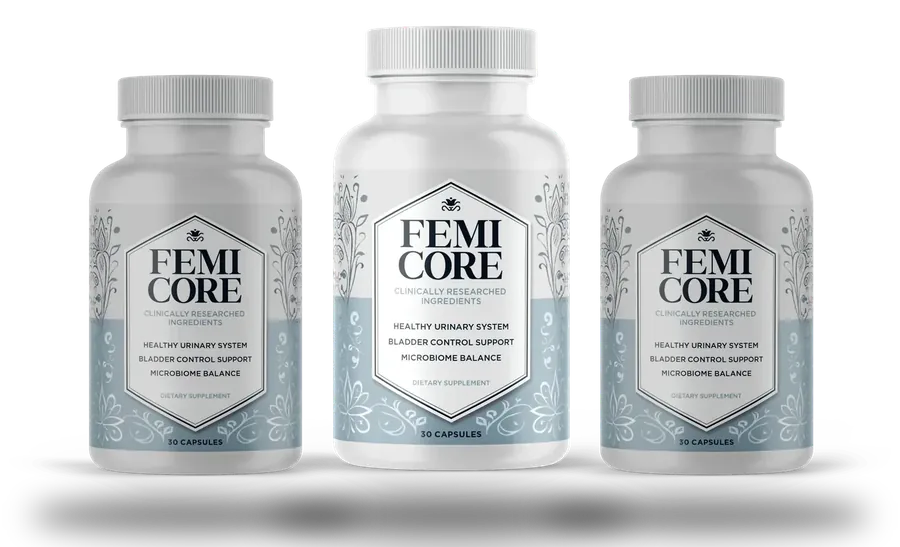
FemiCore is made to support three things on its label: a healthy urinary system, bladder control and microbiome balance.
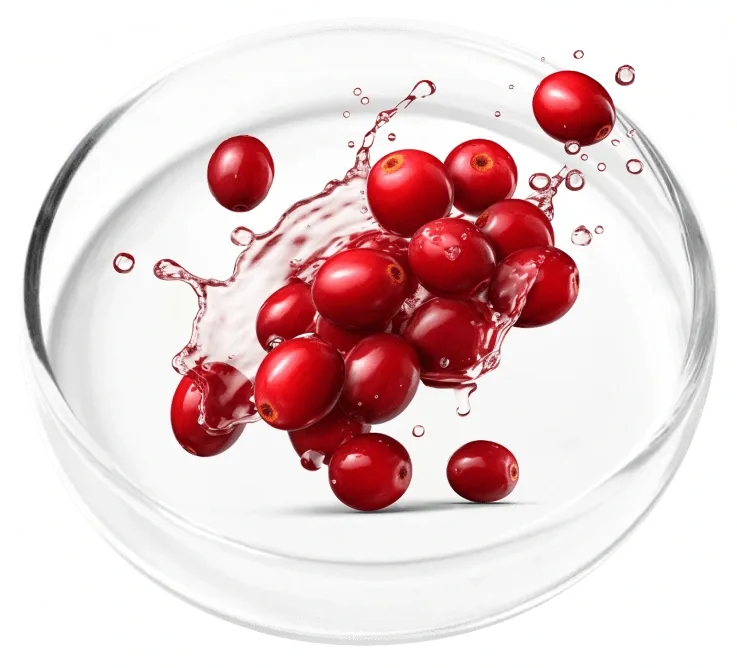
Each claim leans on research about single ingredients. Cranberry, line 2 of 4 in the herbal blend, has the most, including a 2023 review of 50 trials of cranberry products in women.
To see how the two blends fit together, read how FemiCore works.
Written by the FemiCore label benchUpdated
Short verdict
Does FemiCore really work for bladder control?
FemiCore has no proof of working for bladder control, because the capsule has never been through a published trial. That is a gap, not proof that it fails.
What exists is research on some of its nine lines, one at a time. None of it asks whether a woman leaks less.
| Kind of evidence | What we found | What it tells you |
|---|---|---|
| A trial of the FemiCore capsule | None found | The product's effect is unknown |
| A leak or urgency trial of any of the nine lines | None found | "Bladder Control Support" has no direct study behind it |
| Cranberry and repeat UTIs | 50 trials, 8,857 people (Cochrane 2023, cranberries and UTI) | Fewer repeat infections in some groups, at doses we cannot compare |
| L. crispatus LCr86 | One finished trial, no results posted (ClinicalTrials.gov NCT06830122, LCr86) | A vaginal outcome at a stated CFU dose, not the bladder |
| Bearberry leaf | Traditional use only (EMA, Uvae ursi folium (bearberry leaf)) | A one-week herb in EU guidance |
| Berberine and Mimosa pudica seed | No urinary trial found | No bladder evidence either way |
Label claims
What are FemiCore's benefits according to the label?
The FemiCore label lists three benefits: "Healthy Urinary System", "Bladder Control Support" and "Microbiome Balance". Each one ends in a small dagger.
The dagger leads to the FDA box. These are structure/function claims, which a supplement may print without FDA review if it carries that box (21 CFR 101.93, structure/function claims). They cannot name a disease.
Legal wording is not the same as tested wording.
 Label claim 1
The label says“Healthy Urinary System†”
What the evidence saysToo broad to test. Cranberry has the most research of the nine lines, mostly on repeat UTIs in some groups, and it does not treat an infection. (Cochrane 2023, cranberries and UTI) (NCCIH, Cranberry)
 Label claim 2
The label says“Bladder Control Support†”
What the evidence saysNo ingredient here has a bladder-control trial. Pelvic floor training and bladder training have the best evidence for leaks. (NICE NG123, incontinence in women) (Cochrane, PFMT for incontinence)
 Label claim 3
The label says“Microbiome Balance†”
What the evidence saysStrain-specific at best. No CFU count is printed, and the one registered strain trial looked at the vagina, not the bladder. (ClinicalTrials.gov NCT06830122, LCr86)
Every claim here is cut from the front of the label. The dagger points to the FDA statement (21 CFR 101.93, structure/function claims).
Claim 1
Is there evidence for the "Healthy Urinary System" claim?
Yes, but only indirectly, through one ingredient. The closest research to "Healthy Urinary System" is on cranberry and repeat urinary tract infections.
The 2023 Cochrane review pooled 50 trials. Cranberry products cut symptomatic, culture-confirmed UTIs to about 70% of the rate seen without them (Cochrane 2023, cranberries and UTI). The same review found little or no benefit in older adults living in care, in pregnant women, or in people whose bladder does not empty fully.
NCCIH puts the drop for women with repeat UTIs near 25%, and calls the findings inconsistent (NCCIH, Cranberry). It is no treatment for an infection that has already begun.
Now the label math. Cranberry is line 2 of 4 in 350 mg, so it holds at most half: 175 mg of extract. At 30% PAC that is at most about 52 mg of PAC, by a test the maker does not name. The cranberry extract profile explains why that ceiling cannot be lined up with any trial dose.
Claim 2
Does FemiCore give real "Bladder Control Support"?
No study shows it. Not one of FemiCore's nine lines has a published trial measuring leaks, urgency or trips to the bathroom.
A cough that leaks, a dash at the sound of running water, three trips a night: these problems do have tested answers. They are just not in a bottle.
Pelvic floor training
In a Cochrane review, 56.1% of women with stress leaks reported being cured after supervised training, against 6.0% without it (Cochrane, PFMT for incontinence).
Bladder training
Guidelines advise at least 6 weeks of stretching the gap between trips for urge or mixed leaks (NICE NG123, incontinence in women).
Behavior first
The 2024 U.S. guideline says to offer bladder training to every patient with overactive bladder, with its top evidence grade (AUA/SUFU 2024, OAB guideline).
Our pelvic floor and bladder training guide walks through both methods with a printable diary.
Claim 3
What does "Microbiome Balance" mean on the FemiCore label?
"Microbiome Balance" points to the 50 mg probiotic blend of five Lactobacillus strains. The label does not say which one: gut, vagina or bladder.
Probiotic effects belong to single strains. A result for one strain does not carry over to another, even within one species (NCCIH, Probiotics).
The fifth, L. crispatus LCr86, has one completed trial. It gave 80 women 10 billion CFU a day by mouth for 8 weeks and measured vaginal bacteria, not the bladder; no results are posted (ClinicalTrials.gov NCT06830122, LCr86). FemiCore prints no CFU count, so its dose cannot be set beside that one (NIH ODS, Probiotics).
More in urinary microbiome basics.
FemiCore: from $49 a bottle30 capsules · 2, 3 or 6 bottles · free shipping on 6 · 60-day money-back guarantee
See packsSales lines
Is FemiCore "scientifically proven"?
No. The sales page uses the words "scientifically proven", but it names no study, and we found none of the product.
The FTC expects health claims to rest on competent and reliable science, which usually means controlled human trials (FTC, Health Products Compliance Guidance).
The other sales lines show the same gap.
- Label front“Healthy Urinary System†”Structure/function wording, allowed with the FDA statement. Not a disease claim, and FDA did not review it. (21 CFR 101.93, structure/function claims)
- Label front“Bladder Control Support†”No trial of FemiCore was found. None of the nine lines has a bladder-control trial; the first-line care for leaks is pelvic floor and bladder training. (NICE NG123, incontinence in women) (Cochrane, PFMT for incontinence)
- Label front“Microbiome Balance†”Effects are strain-specific, and no CFU count is printed. The one strain with a registered trial (LCr86) was tested at a stated dose for a vaginal outcome. (ClinicalTrials.gov NCT06830122, LCr86)
- Label front“Clinically Researched Ingredients”Some ingredients have research for other uses (cranberry and repeat UTIs, berberine and blood sugar). That is not research on this capsule. (Cochrane 2023, cranberries and UTI) (NCCIH, Cranberry)
- Sales page“scientifically proven”No study is named on the sales text we reviewed. A claim like this needs competent and reliable evidence. (FTC, Health Products Compliance Guidance)
- Sales page“The Natural Breakthrough Formula That Supports a Strong Bladder”Marketing language. Bearberry is a one-week herb in EU guidance, not a daily, long-term one. (EMA, Uvae ursi folium (bearberry leaf))
- Sales page60-day money-back badgesThe images show 60 days; the written terms are not printed on the sales text. We count from the date of purchase. (FemiCore sales page)
Claims as printed on the label and the sales page (FemiCore sales page). Health claims need competent and reliable scientific evidence (FTC, Health Products Compliance Guidance).
Placebo
Could FemiCore results just be placebo or time?
Yes, and without a placebo-controlled trial there is no way to tell. Bladder symptoms rise and fall on their own.
A cold with a cough brings more stress leaks. People often start a supplement in a bad stretch, and the easing that follows can look like a product working.
The fair test at home is a written record. Keep a three-day bladder diary before the first capsule and again near day 45, under similar conditions. Our FemiCore results timeline shows how to time it.
Realistic hopes
Who might reasonably hope for a benefit from FemiCore?
The most reasonable hope belongs to women whose main worry is repeat bladder infections, since cranberry is the one line with trial support. Even there, the dose in a capsule is unknown.
Repeat UTIs
Cranberry trials found fewer repeat infections in some women (Cochrane 2023, cranberries and UTI). Your clinician should still confirm each infection.
Stress or urge leaks
No ingredient has a leak trial. Training has the strong data.
Kidney disorders
EU guidance says women with kidney disorders must not use bearberry leaf (EMA, Uvae ursi folium (bearberry leaf)).

Keep taking prescribed medicine whatever you decide about a supplement.
Bottom line
Is FemiCore worth trying for its benefits?
FemiCore is worth trying only as an add-on to proper bladder care, with clear eyes about the evidence. The routine is one capsule, and the 60-day window leaves time to judge with a diary.
Against that: no product trial, no single amounts, no CFU count, and a bearberry line meant for one-week courses in EU guidance. Our is FemiCore legit? check covers the seller side.
FAQ
Questions about FemiCore claims and evidence
Which FemiCore label claim has the most research behind it?
"Healthy Urinary System" has the most, because cranberry sits under it. Cranberry products lowered repeat UTIs in a 2023 review of 50 trials (Cochrane 2023, cranberries and UTI). That still is research on cranberry alone, at many doses, and not on FemiCore's capsule.
How strong is the evidence for FemiCore's ingredients?
It ranges from moderate to none. Cranberry for repeat UTIs is rated moderate certainty. LCr86 has one trial with no posted results, bearberry rests on traditional use, and berberine and Mimosa pudica seed have no urinary trials we could find.
Can a placebo effect explain FemiCore results?
It can, and nobody can rule it out yet. Bladder symptoms vary week to week, and starting a supplement often comes with new habits. Only a placebo-controlled trial of the capsule could separate the two, and none has been published.
Why does the FemiCore sales page say "scientifically proven"?
The sales page uses the phrase but names no study. We found no trial of the product. Under FTC guidance, a health claim needs competent and reliable scientific evidence, usually controlled human trials (FTC, Health Products Compliance Guidance).
What can I realistically expect from FemiCore?
Expect a simple daily routine, not a fix. Nobody knows what the capsule does for leaks. A fair plan is to keep a bladder diary, do pelvic floor or bladder training at the same time, and judge before the 60-day window closes.
Who is least likely to benefit from FemiCore?
Women whose main problem is leaking with a cough or sudden urges have the least to go on, since no line has a leak trial. Cochrane also found little or no cranberry benefit in pregnant women and in people who cannot empty the bladder fully (Cochrane 2023, cranberries and UTI).
Who wrote this
Written and reviewed by
Pages built from the label, the sales page and linked NIH, FDA, FTC, EMA and peer-reviewed sources.
Last updated . See our editorial standards and how we check reviews. This website is run by a U.S. stocking partner for FemiCore, not by the manufacturer or the label's distributor. We are paid when you buy through our order links.
Keep reading
More about FemiCore

U.S. stocking partner for FemiCore
Ready to try FemiCore?
Start with a check of your medicines, then pick a pack. Six bottles ship free and cost the least per bottle, and every pack sits inside the 60-day money-back window.
- Secure checkout
- 60-day money-back guarantee
- Ships from the U.S.