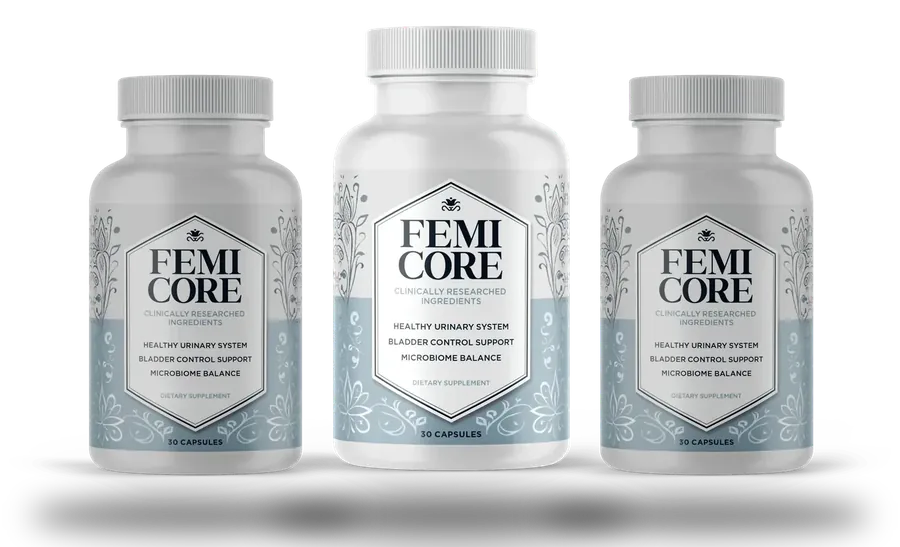
Ingredient
Cranberry Extract (30% PAC) in FemiCore: The Numbers and the Research
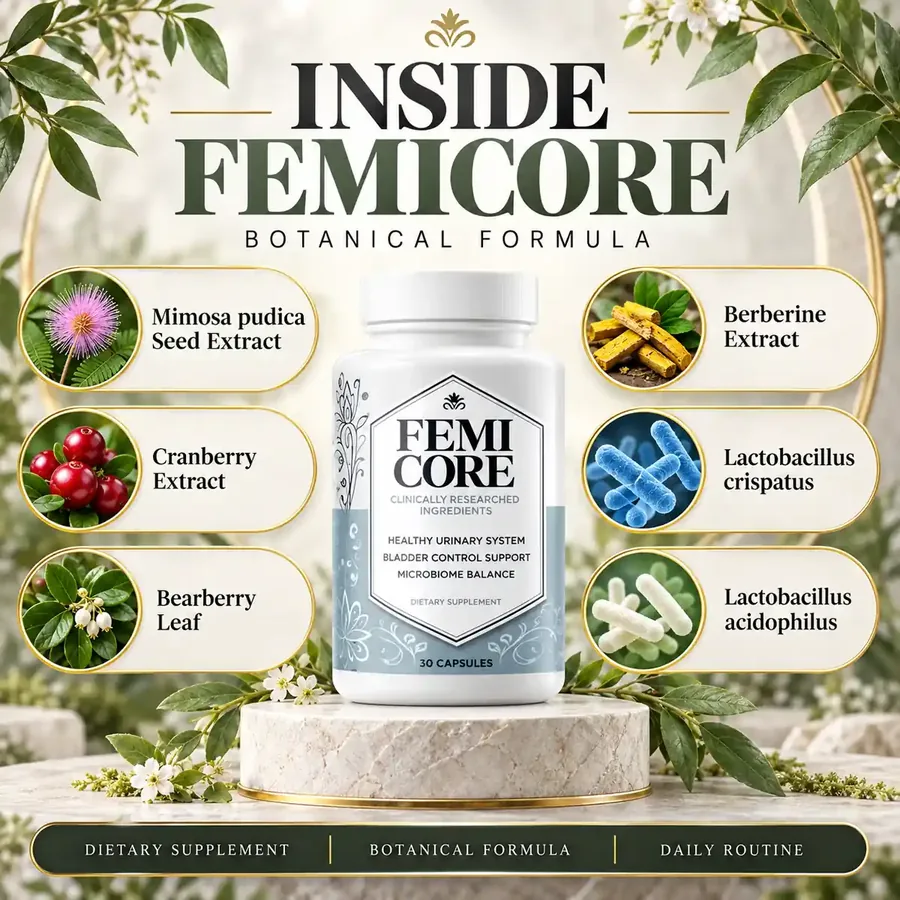
Cranberry extract PAC is the second of four lines in FemiCore's 350 mg herbal blend, standardized to 30% proanthocyanidin. Label order caps it at 175 mg, so at most about 52 mg of PAC per capsule. Cranberry products lowered repeat urinary infections in some women in a 2023 Cochrane review, but no study links cranberry to bladder control or tested this capsule.
Written by the FemiCore label benchUpdated
The line
What is the cranberry extract PAC line in FemiCore?
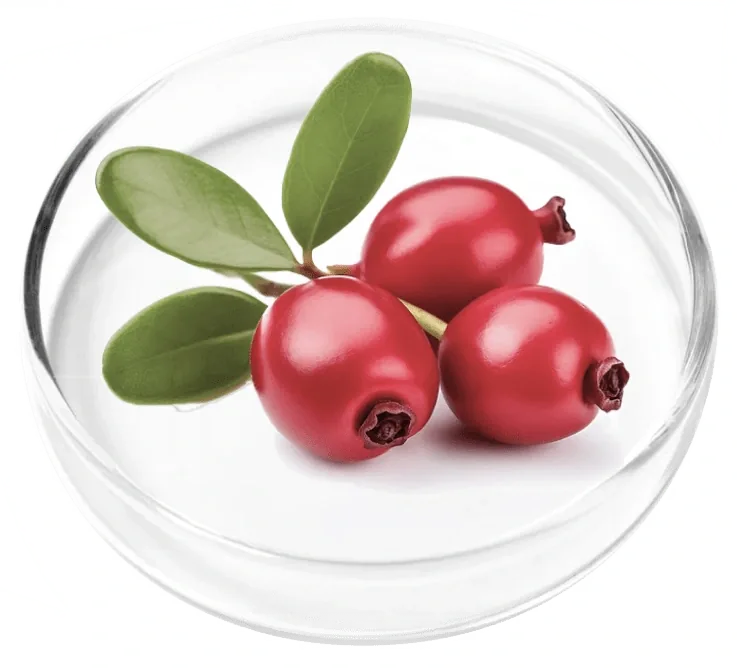
The cranberry extract PAC line is a dried extract of American cranberry fruit (Vaccinium macrocarpon), standardized so that 30% of it is proanthocyanidin. It is printed second of four lines in the 350 mg herbal blend.
The exact words on the bottle are "Cranberry Extract (Vaccinium macrocarpon)(berry)(std. to 30% proanthocyanidin)". Three facts sit inside those brackets: the species, the plant part, and a purity target for one group of compounds.
The label prints no milligram figure for the line and no name for the test behind the 30%.
| Name on the label | Cranberry Extract (Vaccinium macrocarpon)(berry)(std. to 30% proanthocyanidin) |
|---|---|
| What it is | American cranberry fruit, standardized to proanthocyanidins (PACs) |
| Place on the label | Line 2 of 4 in the 350 mg herbal blend |
| Amount per capsule | Not printed; line 2 of 4 in the 350 mg herbal blend. Label order caps it at 175 mg |
| Amount used in research | Trials tested many cranberry products and doses (50 trials, Cochrane 2023) |
| Strength of evidence | Moderate: fewer repeat UTIs in some groups; no bladder-control data |
| Marketed or traditional use | UTI prevention research |
| Main caution | Evidence on warfarin is conflicting: ask first if you take it. It does not treat an active UTI. |
| Our note | At most 175 mg of extract by label order. At 30% PAC that is at most about 52 mg of PAC by the maker's own test method, which is not named, and PAC figures from different methods do not compare. |
Arithmetic
How much cranberry extract is in one FemiCore capsule?
At most 175 mg of cranberry extract can be in one FemiCore capsule. That is a ceiling worked out from label order, not a printed amount.
A proprietary blend must list its lines from heaviest to lightest and may print only the total (21 CFR 101.36, supplement labeling). Mimosa pudica sits above cranberry, so cranberry can never outweigh it. Two lines sharing 350 mg means the second one holds half at the very most.
The true figure could be far lower: think of a jar of 350 marbles where the second color fills half the jar, or just a handful.
| Herbal blend total | 350 mg (printed) |
|---|---|
| Place in the blend | Line 2 of 4 (printed) |
| Extract ceiling | 350 mg divided by 2 = at most 175 mg |
| PAC share | 30% (printed, method not named) |
| PAC ceiling | 175 mg x 0.30 = at most about 52 mg |
| Exact amount | Not printed |
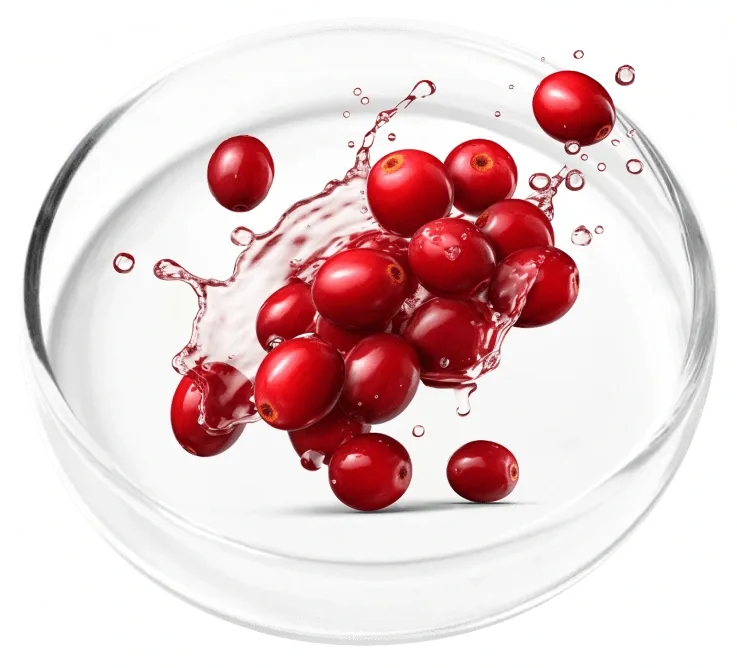
The full FemiCore ingredient list runs the same math for all nine lines.
PAC
What does 30% proanthocyanidin mean on a cranberry label?
Proanthocyanidins, or PACs, are a family of plant compounds found in cranberries, grapes and cocoa. "Standardized to 30%" means the supplier aims for PACs to make up 30% of the extract by weight.
The number depends on the lab method. Different PAC tests can read the same powder very differently.
The FemiCore label does not say which test was used. Without that, the roughly 52 mg ceiling can only be read as the maker's own figure, not as a match for any study dose.
People often search for a 36 mg PAC dose. None of the sources this site cites sets that number, and FemiCore's label cannot be lined up with any trial dose, because the method and the true amount are both missing. If a dose matters to you, ask a pharmacist to compare products that print both.
Research
Does cranberry lower the chance of repeat UTIs?
Yes, for some groups, by a modest amount. A 2023 Cochrane review pooled 50 trials with 8,857 people and found fewer symptomatic, culture-confirmed urinary tract infections with cranberry products (Cochrane 2023, cranberries and UTI).
In women with repeat infections, the risk fell by roughly a quarter (risk ratio 0.74). NCCIH gives a similar figure but warns that results across studies are inconsistent (NCCIH, Cranberry).
Not every group gained. NICE, the UK guideline body, calls the benefit uncertain and found no evidence of benefit in older women (NICE NG112, recurrent UTI).
| Group | Finding |
|---|---|
| All trial participants | Fewer symptomatic UTIs (risk ratio 0.70) |
| Women with recurrent UTIs | Fewer repeat UTIs (risk ratio 0.74) |
| Older adults living in care homes | Little or no benefit |
| Pregnant women | Little or no benefit |
| People who cannot empty the bladder fully | Little or no benefit |
All of this concerns cranberry products on their own, not a nine-line capsule. The cranberry and UTIs guide covers the trials in more depth.
Leaks
Does cranberry help with bladder leaks or bladder control?
No study shows that cranberry helps bladder leaks or bladder control. The research tracks infections, which is a different problem.
A leak when you sneeze, or a rush to the toilet that arrives too late, comes from pelvic floor muscles and bladder signals. An infection is germs in the urinary tract. Cranberry trials counted infections, not pads or toilet trips.
For leaks, the evidence points to training. NICE advises supervised pelvic floor muscle training for at least 3 months for stress leaks, and bladder training for at least 6 weeks for urgency (NICE NG123, incontinence in women).
The pelvic floor and bladder training guide walks through both, with a three-day diary.
FemiCore: from $49 a bottle30 capsules · 2, 3 or 6 bottles · free shipping on 6 · 60-day money-back guarantee
See packsSafety
Is cranberry extract safe with warfarin or a kidney stone history?
Cranberry taken by mouth is generally safe, but people on warfarin should ask first. NCCIH says the evidence on a warfarin interaction is conflicting, so a talk with your prescriber comes before the first capsule (NCCIH, Cranberry).
Large amounts can upset the stomach. In pregnancy and breastfeeding, larger amounts are not well studied, and the label asks pregnant or nursing women to see a physician first.
Kidney stones are a gap in the evidence. None of the cited sources links cranberry to stones, and the NIDDK diet advice for calcium oxalate stones does not mention cranberry at all (NIDDK, diet for kidney stones (oxalate)). If you have had a stone, ask your clinician before any cranberry product.
Cranberry does not treat a UTI that has already started (NCCIH, Cranberry). Burning, fever, back or side pain, or blood in the urine need a clinician soon. Take any antibiotic course and other prescribed medicine exactly as directed.
Forms
Is a cranberry extract capsule the same as cranberry juice?
No. Juice, dried powder and standardized extract are different products, and trials used all of them at many strengths.
Juice brings water, sugar or sweetener and a lot of volume. An extract concentrates part of the fruit into a small dose. The Cochrane review grouped juices, tablets and capsules together, which is one reason the right dose is still debated (Cochrane 2023, cranberries and UTI).
So a glass of juice and a FemiCore capsule cannot be swapped one for one.
Juice
Large volume, often sweetened. PAC content varies by brand and is rarely printed.
Plain powder
Dried whole fruit. Gentler on sugar, but a capsule holds only a little.
Standardized extract
Concentrated to a PAC target. FemiCore's is 30%, method not named, amount not printed.
Next line
Where does cranberry sit among FemiCore's other lines?
Cranberry sits second, between Mimosa pudica above it and bearberry leaf below it. It is the herbal line with the most human research behind it.
The line under it, bearberry leaf, is also a traditional urinary herb, but EU guidance limits it to one-week courses. Read the pages in label order to see how the evidence thins out as the ceilings drop.
FAQ
Cranberry extract questions, answered from the label
What is PAC in a cranberry supplement?
PAC stands for proanthocyanidin, a group of plant compounds found in cranberries. A label that says "standardized to 30% proanthocyanidin" means the supplier targets PACs at 30% of the extract's weight. The reading depends on the test method, and FemiCore does not name its method.
Does FemiCore reach the 36 mg PAC dose people talk about?
Nobody can say. The label prints no cranberry amount, only a ceiling of 175 mg of extract, or at most about 52 mg of PAC by an unnamed method. None of the sources this site cites sets a 36 mg dose, so no match can be claimed either way.
Is cranberry for UTIs the same as cranberry for leaks?
No. Cranberry trials counted urinary infections, and some found fewer repeat infections in women (Cochrane 2023, cranberries and UTI). Leaks come from muscle and bladder-signal problems, and no cranberry study measured them. Pelvic floor and bladder training are the first steps for leaks (NICE NG123, incontinence in women).
Can I take a cranberry capsule if I am on warfarin?
Ask your prescriber or pharmacist first. NCCIH reports that the evidence on cranberry and warfarin is conflicting, so no one can promise it is free of an effect (NCCIH, Cranberry). Never change your warfarin dose on your own because of a supplement.
Does cranberry extract cause kidney stones?
The cited sources do not settle it. NCCIH's cranberry page does not mention stones, and the NIDDK oxalate diet advice does not mention cranberry (NIDDK, diet for kidney stones (oxalate)). If you have had a kidney stone, ask your clinician before starting any cranberry product.
Is cranberry extract stronger than cranberry juice?
Gram for gram, an extract is more concentrated, but strength is hard to compare. Juice brands rarely print PACs, and extracts use different test methods. Trials used juices, tablets and capsules at many doses, so neither form has a settled best amount.
Can cranberry clear a UTI I already have?
No. NCCIH says cranberry is not a treatment for an existing urinary infection (NCCIH, Cranberry). Burning, fever, side pain or blood in the urine need a clinician, who may prescribe an antibiotic. Finish any prescribed course as directed.
Who wrote this
Written and reviewed by
Pages built from the label, the sales page and linked NIH, FDA, FTC, EMA and peer-reviewed sources.
Last updated . See our editorial standards and how we check reviews. This website is run by a U.S. stocking partner for FemiCore, not by the manufacturer or the label's distributor. We are paid when you buy through our order links.
Keep reading
More about FemiCore
U.S. stocking partner for FemiCore
Ready to try FemiCore?
Start with a check of your medicines, then pick a pack. Six bottles ship free and cost the least per bottle, and every pack sits inside the 60-day money-back window.
- Secure checkout
- 60-day money-back guarantee
- Ships from the U.S.