Who it's for
Who Is FemiCore For, and Who Should Ask a Doctor First?
FemiCore is for adult women who want daily urinary and bladder support.
It fits best when a clinician has checked your leaks or urges and you already do pelvic floor or bladder training. Pregnant or nursing women, anyone under 18 and anyone with a kidney disorder should talk to a doctor first.
Before you start, read the FemiCore side effects.
Written by the FemiCore label benchUpdated
Good fit
Who should take FemiCore?
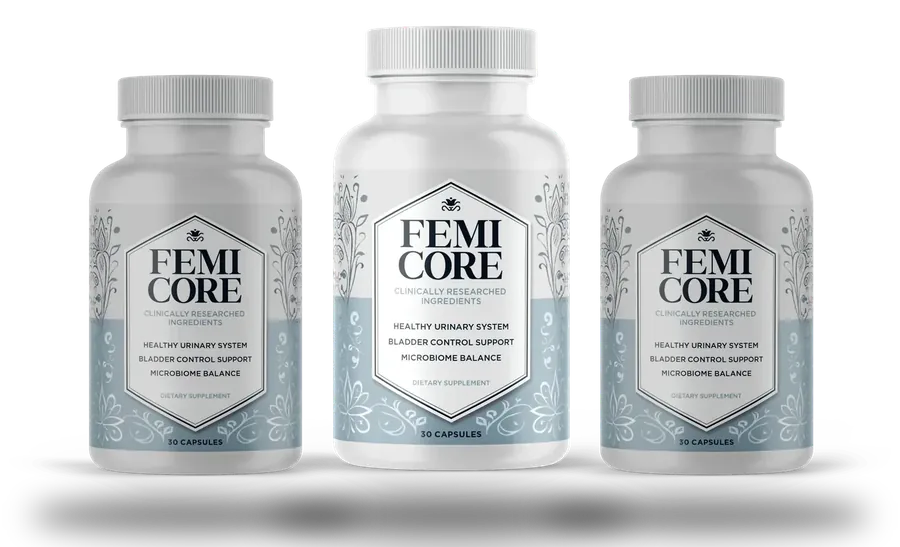
FemiCore is meant for adult women who want a daily supplement aimed at urinary health, after a clinician has looked at their symptoms. The label's directions begin "adults take one (1) capsule daily", and the sales page speaks to women.
The fairest candidate already has the basics in place. She knows her leak type, keeps up pelvic floor or bladder training, and is curious whether a capsule adds anything on top. She also accepts that no trial has tested FemiCore itself.
Think of it like a label on a lab shelf: it tells you what is in the jar, not whether the jar suits you. The table sorts common situations into three groups.
| Situation | Fit | Why |
|---|---|---|
| Adult woman, symptoms checked, doing pelvic floor work | Can try | Label dose is for adults; first-line care is in place |
| Repeat UTIs, curious about cranberry | Ask first | Cranberry evidence is mixed; prevention plans belong with a clinician |
| Takes warfarin or other daily medicine | Ask first | Cranberry and warfarin evidence is conflicting |
| Weakened immune system | Ask first | Live cultures carry more risk in this group |
| Pregnant, nursing or under 18 | Doctor first | The label asks this group to consult a physician |
| Kidney disorder | Skip unless cleared | EU guidance rules out bearberry leaf |
| Burning, fever or blood in urine now | See a clinician | Possible infection; no supplement treats it |
Not a fit
Who should not take FemiCore?
FemiCore is not for anyone pregnant or nursing, under 18, or living with a known medical condition unless a physician agrees first; the label's caution says so. Women with a kidney disorder should not take it without their doctor's go-ahead.
The kidney point comes from one ingredient. Bearberry leaf is line 3 of the herbal blend, and the European Medicines Agency says women with kidney disorders must not use it. The same monograph limits it to one week of use (EMA, Uvae ursi folium (bearberry leaf)).
A weakened immune system is another reason to ask. Serious infections from probiotics have occurred, mostly in people who were very ill or immunocompromised (NIH ODS, Probiotics).
Keep taking prescribed medicine exactly as directed; a supplement never replaces it. The full list of risks is on FemiCore side effects.
Self-check
Is FemiCore right for you? Six quick questions
Six yes-or-no questions sort out whether FemiCore is reasonable to try, needs a talk with your doctor, or should wait. Answer all six to see the result.
A single yes is enough to pause. The checklist does not replace a visit; it tells you what to bring up at one.
Leak types
Which bladder leaks is FemiCore meant for?
FemiCore names no leak type; its label says only "Bladder Control Support". That matters, because each type of leak has a different first treatment, and none of them is a capsule.
A cough that leaks is a stress leak, and supervised pelvic floor training for at least three months comes first. A rush that cannot wait is an urge leak, and bladder training for at least six weeks comes first (NICE NG123, incontinence in women). Leaks are common, and they are not an inevitable part of getting older (Mayo Clinic, urinary incontinence causes).
Find your row below before you buy anything. Overflow and functional leaks in particular need a clinician's eye.
Stress leaks
A spurt when you cough, sneeze, laugh, lift or jump.
First stepsSupervised pelvic floor muscle training for at least 3 months.
Urge leaks
A sudden, strong need to go, then leaking on the way.
First stepsBladder training for at least 6 weeks; try less caffeine.
Mixed
Stress and urge leaks together.
First stepsPelvic floor training plus bladder training.
Overflow
Dribbling from a bladder that does not empty well.
First stepsNeeds a clinician's check; Kegels help less here.
Functional
The bladder works, but reaching the toilet in time is hard.
First stepsMobility, clothing and bathroom access come first.
Types from Mayo Clinic and MedlinePlus (Mayo Clinic, urinary incontinence causes) (MedlinePlus, Urinary Incontinence); first steps from NICE and Cochrane (NICE NG123, incontinence in women) (Cochrane, PFMT for incontinence) (Mayo Clinic, Kegel exercises). A clinician can tell which type you have.
Causes and tests are set out in bladder leaks in women, explained.
Over 50
Is FemiCore a bladder supplement for women over 50?
FemiCore has no age ceiling on its label, so women over 50 are within its "adults" wording. Nothing on the label is tailored to menopause, though.
Menopause changes the bladder's surroundings. Lower estrogen can thin the tissue of the vagina and urinary tract, a condition called genitourinary syndrome of menopause, and leaks can follow (Cleveland Clinic, postmenopause). Menopause also raises the risk of urinary tract infections (Mayo Clinic, UTI).
For repeat infections after menopause, NICE says vaginal estrogen may be considered, and it finds no evidence that cranberry helps older women (NICE NG112, recurrent UTI). That is worth raising with your doctor before you rely on a cranberry line. More in menopause and the bladder.
FemiCore: from $49 a bottle30 capsules · 2, 3 or 6 bottles · free shipping on 6 · 60-day money-back guarantee
See packsMen
Can men take FemiCore?
Men are not excluded by the label, which says "adults", but FemiCore is designed and sold for women. Its lead strain, L. crispatus, is studied for the vaginal microbiome, which does not apply to men (Ravel et al. 2011, vaginal microbiome).
Urinary symptoms in men also tend to have different causes, and they deserve a check of their own. A man with a weak stream, frequent night trips or leaks should see a clinician rather than borrow a partner's bottle.
Diet
Is FemiCore vegetarian or vegan?
No. FemiCore is neither vegetarian nor vegan, because the capsule shell is gelatin, an animal product. The other ingredients line on the label reads: Gelatin (capsule), Brown Rice Flour, Magnesium Stearate, Olive Oil, Silicon Dioxide.
A carrot-shaped "vegetarian" badge appears on the sales page. It does not match the label, and the label wins. If you avoid animal products, FemiCore is not for you as sold. Notes on every badge are on FemiCore testing and quality.
No dairy is listed, and brown rice flour is the only grain. The gluten-free and dairy-free badges name no test, so people with coeliac disease or a milk allergy should read the label with a clinician.
Fair hopes
Who is likely to be disappointed by FemiCore?
Anyone who hopes a capsule alone will make leaks go away is likely to be disappointed. No trial shows FemiCore does that, and the strongest evidence for leaks is training, not supplements (Cochrane, PFMT for incontinence).
Realistic
A daily capsule alongside pelvic floor work, judged by a written diary.
Unclear
Cranberry and repeat UTIs: about 25% fewer in women in some studies, with inconsistent findings (NCCIH, Cranberry).
Not supported
Replacing training, treatment or prescribed medicine with a capsule.
How to fit it into a day is on how to take FemiCore.
FAQ
Who FemiCore is for: more questions
Is there an age limit for FemiCore?
The label is written for adults and asks anyone under 18 to consult a physician first. It sets no upper age. Older women should still check with their doctor, because age brings more medicines and a higher chance of kidney changes, and bearberry is not for kidney disorders.
Can I take FemiCore while pregnant or breastfeeding?
Not without your doctor's agreement. The label tells pregnant or nursing mothers to consult a physician before using it. Many supplements have not been tested in pregnant or nursing women, and FemiCore's herbal blend has no pregnancy data in the sources we cite.
Does FemiCore help with menopause bladder changes?
No study shows that it does. Menopause can bring leaks and more urinary infections through lower estrogen. Options with evidence, such as pelvic floor training and, for repeat infections, vaginal estrogen, are worth discussing with your doctor before relying on a supplement.
Is FemiCore made for men too?
It is sold for women, and its lead strain is researched for the vaginal microbiome. The label only says adults, so it does not forbid men, but men with urinary symptoms should have them checked first, since the usual causes differ.
Can vegetarians take FemiCore?
Not as sold. The capsule is made of gelatin, which comes from animals, even though a sales-page badge says vegetarian. Anyone who avoids gelatin should skip it. The label's ingredient list is the record to trust over any badge.
Can I take FemiCore with kidney disease?
Not without your kidney doctor's approval. Bearberry leaf, one of the four herbs, must not be used by women with kidney disorders according to the European Medicines Agency. Bring the label to your appointment so your doctor can see every ingredient.
Who wrote this
Written and reviewed by
Pages built from the label, the sales page and linked NIH, FDA, FTC, EMA and peer-reviewed sources.
Last updated . See our editorial standards and how we check reviews. This website is run by a U.S. stocking partner for FemiCore, not by the manufacturer or the label's distributor. We are paid when you buy through our order links.
Keep reading
More about FemiCore



U.S. stocking partner for FemiCore
Ready to try FemiCore?
Start with a check of your medicines, then pick a pack. Six bottles ship free and cost the least per bottle, and every pack sits inside the 60-day money-back window.
- Secure checkout
- 60-day money-back guarantee
- Ships from the U.S.