Ingredient
Bearberry Uva Ursi Leaf in FemiCore: Uses, the One-Week Limit and Safety
Bearberry uva ursi is the dried leaf of a low evergreen shrub, Arctostaphylos uva-ursi, and it sits third of four lines in FemiCore's 350 mg herbal blend. Label order caps it at about 117 mg a capsule. EU guidance backs only traditional use for mild urinary symptoms in adult women, for no longer than one week, and no clinical study has tested leaf-only products.
Written by the FemiCore label benchUpdated
The line
What is bearberry uva ursi, and where is it on the FemiCore label?
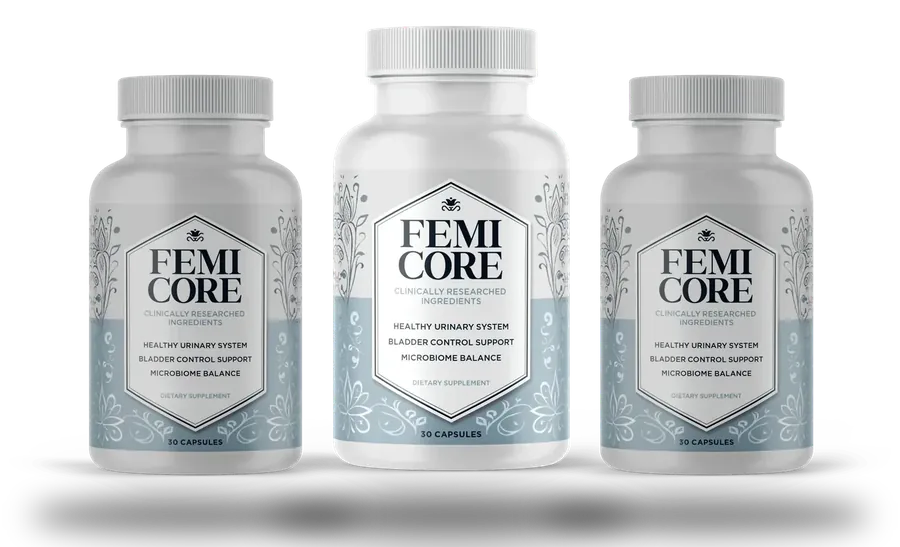
Bearberry uva ursi is the leaf of a creeping evergreen shrub with red berries, used for centuries as a urinary herb. On the FemiCore label it reads "Bearberry (Arctostaphylos uva-ursi)(leaf)", third of the four herbal lines.
Three details on that line matter. It names the leaf, not the berry. It does not say "extract", so it gives no extract ratio. And unlike the cranberry line, it carries no standard for any active compound.
| Name on the label | Bearberry (Arctostaphylos uva-ursi)(leaf) |
|---|---|
| What it is | Leaf of a low evergreen shrub; contains arbutin |
| Place on the label | Line 3 of 4 in the 350 mg herbal blend |
| Amount per capsule | Not printed; line 3 of 4 in the 350 mg herbal blend. Label order caps it at 116.7 mg |
| Amount used in research | EU traditional use: adult women, no longer than one week |
| Strength of evidence | Traditional use only; no clinical studies of bearberry leaf alone |
| Marketed or traditional use | Traditional remedy for mild, recurrent lower urinary symptoms |
| Main caution | EMA: not longer than one week, not with kidney disorders, see a doctor if symptoms last over four days. A daily capsule runs longer. |
Ceiling
How much bearberry leaf is in one FemiCore capsule?
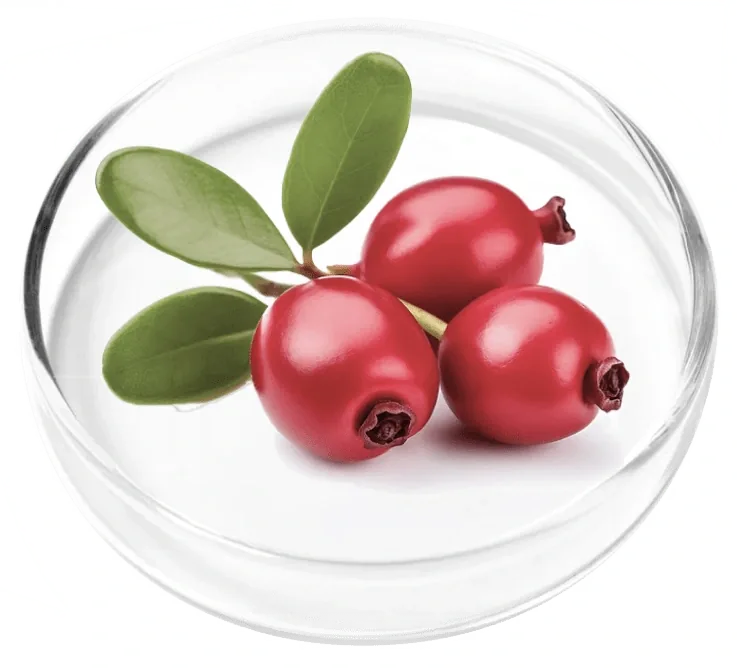
At most about 117 mg, and possibly far less. The label gives no single amount, only the 350 mg total for four herbs.
Blend lines run from heaviest to lightest (21 CFR 101.36, supplement labeling). Bearberry is line 3, so it cannot outweigh the two lines above it. The most it could be is a three-way split: 350 divided by 3, or 116.7 mg. If the first two lines are heavy, bearberry could be a few milligrams.
No source we cite gives a studied amount of bearberry leaf to set beside that number. So the ceiling tells you the upper edge, not whether it is a lot or a little.
| Line | Herb | Working | Ceiling |
|---|---|---|---|
| 1 | Mimosa pudica seed extract | 350 / 1 | 350 mg |
| 2 | Cranberry extract (30% PAC) | 350 / 2 | 175 mg |
| 3 | Bearberry leaf | 350 / 3 | about 117 mg |
| 4 | Berberine HCl extract 8% | 350 / 4 | 87.5 mg |
Traditional use
What is uva ursi used for, according to EU herbal guidance?
Uva ursi is used, by tradition, to ease mild urinary symptoms that keep coming back, such as burning and frequent trips, in adult women. That is the scope of the European Medicines Agency monograph on bearberry leaf (EMA, Uvae ursi folium (bearberry leaf)).
"Traditional use" is a label for long experience, not trial proof. The monograph states that no clinical studies exist for preparations made only from the leaf. LiverTox adds that the leaf has also been used as a diuretic (NIH LiverTox, Uva Ursi).
Notice the gap with the FemiCore front panel. "Bladder Control Support" points at leaks, while the EU use is about irritation and frequency. Burning on urination can also be an infection that needs a test and often antibiotics (CDC, About UTIs).
What the monograph backs
Short courses for mild, recurring lower urinary symptoms in adult women, based on traditional use.
What it does not back
Daily use for months, leaks or bladder control, men, teenagers, or anyone with a kidney disorder.
The one-week rule
Why is uva ursi limited to one week?
Uva ursi is limited to one week because the EU monograph sets that as the longest course. It also says to see a doctor if symptoms last more than four days or get worse (EMA, Uvae ursi folium (bearberry leaf)).
The source we cite gives the limit, not a long explanation of it. What it does make clear is the shape of use: a few days, a check on progress, then a stop.
A FemiCore bottle runs on a different clock. One capsule a day lasts 30 days, and a 6-bottle pack lasts 180.
- Days 1-4
The window the monograph allows before symptoms that have not eased need a doctor.
- Day 7
The end of the longest course the monograph describes.
- Day 30
The end of one FemiCore bottle at the label dose, four times longer.
- Day 180
The end of a 6-bottle pack. Ask your doctor before a plan this long.
Kidneys
Is bearberry safe if you have kidney problems?
No. The EU monograph says women with kidney disorders must not use bearberry leaf (EMA, Uvae ursi folium (bearberry leaf)). That is one of the firmest lines in any source on FemiCore's ingredients.
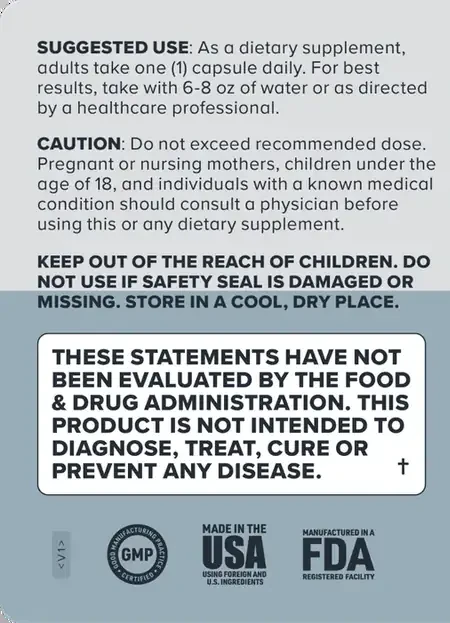
The FemiCore label does not repeat that warning. It asks anyone with "a known medical condition" to consult a physician, which covers kidney disease, but you have to know the herb is there to ask the right question.
If your kidney function has ever been flagged on a blood test, bring the bottle to that appointment before the first capsule.
Kidney disorder: do not start FemiCore without your doctor's go-ahead. Taking other medicines: ask a pharmacist, since supplements can interact with them (NCCIH, Using Supplements Wisely). Keep taking prescribed medicine as directed. More on FemiCore side effects.
FemiCore: from $49 a bottle30 capsules · 2, 3 or 6 bottles · free shipping on 6 · 60-day money-back guarantee
See packsLiver and stomach
Does uva ursi affect the liver or the stomach?
For the liver, the record is reassuring. LiverTox finds no convincing published case of liver injury from uva ursi and no link to raised liver enzymes. It gives the herb a likelihood score of E, meaning an unlikely cause (NIH LiverTox, Uva Ursi).
The stomach is a different story. The EU monograph lists nausea, vomiting and stomach ache as reported side effects (EMA, Uvae ursi folium (bearberry leaf)).
A practical step: take the capsule with the full 6-8 oz of water the label asks for, and stop if your stomach keeps protesting. Bring that note to your doctor.
Pregnancy and daily use
Can you take uva ursi daily or while pregnant?
Daily use for weeks is outside the EU guidance, which stops at one week. A daily FemiCore capsule passes that line in its second week, so talk to your doctor before a long run.
Pregnancy and breastfeeding are not addressed in the sources we cite on bearberry. That is a gap in the evidence, not a sign of safety. The FemiCore label itself asks pregnant or nursing mothers to consult a physician first.
The same caution covers arbutin, the compound bearberry leaf is best known for. The label sets no arbutin level, so nobody can say how much a capsule holds. Questions about it belong with a pharmacist.
Verdict
What does bearberry add to FemiCore, honestly?
Bearberry adds a herb with a long urinary history and a short, cautious EU course. It does not add proof for leaks or daily use.
Weigh it beside cranberry, the line with the most research, on the cranberry extract page. All nine lines sit side by side on the FemiCore ingredients page, and medicine questions on supplements and medicines.
In its favor
- Named plainly, with Latin name and plant part
- A long record of traditional urinary use
- No liver-injury signal on LiverTox
Against it
- No amount and no arbutin standard printed
- A one-week herb inside a daily capsule
- Not for kidney disorders, and the label does not say so
FAQ
Bearberry leaf questions, short answers
What happens if I take uva ursi for longer than a week?
The EU monograph does not cover that use, so there is no guidance saying it is fine. Its advice is one week at most, with a doctor's visit if symptoms last past four days. If you plan to take FemiCore for a month or more, ask your doctor first.
What is arbutin, and how much is in FemiCore?
Arbutin is the compound bearberry leaf is best known for. FemiCore's label sets no arbutin level for its bearberry line, so the amount per capsule is unknown. A pharmacist can talk through what that means for you.
Can I take FemiCore with kidney disease?
Not without your doctor. The EU monograph says women with kidney disorders must not use bearberry leaf, and FemiCore lists it third in its herbal blend. The label only asks people with a medical condition to consult a physician, so bring the bottle to that talk.
Is bearberry leaf safe during pregnancy?
The sources cited here do not say, and silence is not a green light. The FemiCore label asks pregnant or nursing mothers to consult a physician before using it. With a herb meant for short adult courses, that conversation should happen before the first capsule.
Is one small daily dose of bearberry different from a one-week course?
Possibly, but no cited source tested it. FemiCore holds at most about 117 mg of the leaf a capsule, and the label prints no exact figure. The EU guidance is built around short courses, so a low daily dose is simply outside the evidence.
Does uva ursi raise liver enzymes?
Not according to NIH LiverTox. It reports no convincing cases of liver injury and no link to raised liver enzymes, and it rates uva ursi an unlikely cause, score E. That entry covers the liver only, not the kidneys, the stomach or pregnancy.
Who wrote this
Written and reviewed by
Pages built from the label, the sales page and linked NIH, FDA, FTC, EMA and peer-reviewed sources.
Last updated . See our editorial standards and how we check reviews. This website is run by a U.S. stocking partner for FemiCore, not by the manufacturer or the label's distributor. We are paid when you buy through our order links.
Keep reading
More about FemiCore

U.S. stocking partner for FemiCore
Ready to try FemiCore?
Start with a check of your medicines, then pick a pack. Six bottles ship free and cost the least per bottle, and every pack sits inside the 60-day money-back window.
- Secure checkout
- 60-day money-back guarantee
- Ships from the U.S.