Ingredient
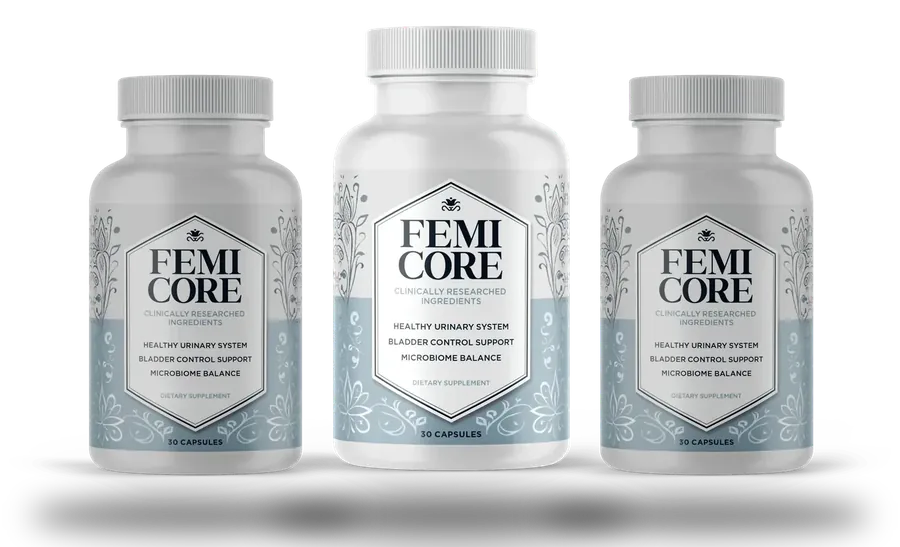
Berberine Hydrochloride Extract 8%: Line 4 of FemiCore
Berberine hydrochloride is the salt form of berberine, a bitter yellow alkaloid taken from the bark and root of certain shrubs. In FemiCore it is line 4 of 4 in the 350 mg herbal blend, so label order caps the extract at 87.5 mg. No bladder or urinary trial of berberine was found, and its research sits mostly in metabolic health.
Written by the FemiCore label benchUpdated
The compound
What is berberine hydrochloride?
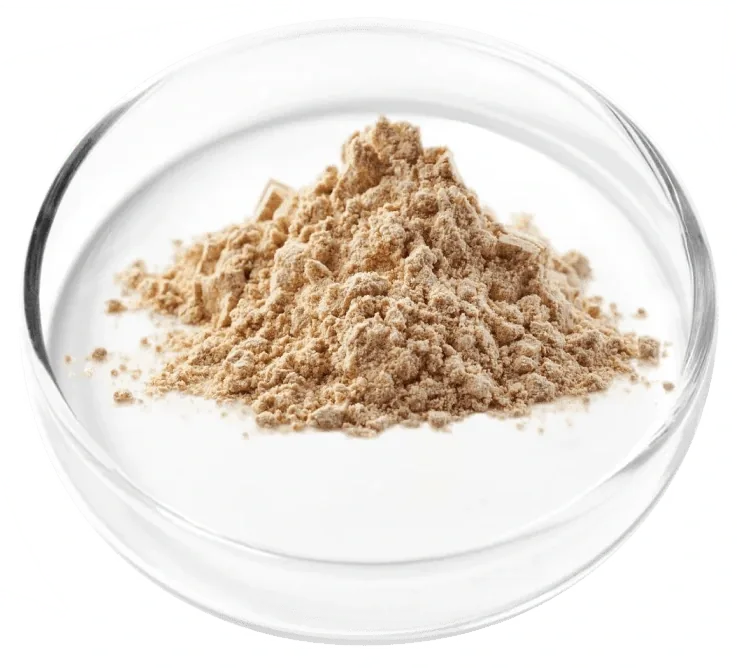
Berberine hydrochloride is berberine bound to hydrochloric acid, a salt that makes the plant compound easier to handle as a dry powder. Berberine itself is an alkaloid: a nitrogen-holding molecule that plants make, often bitter, often brightly colored.
NIH's LiverTox entry names goldenseal, barberry and Oregon grape as plants that contain it (NIH LiverTox, Berberine). FemiCore's label only says "(bark/root)", so the source plant is not printed.
Reading the label line word by word
- Granular: the powder has been formed into small grains, which usually helps it flow into capsules evenly.
- Berberine Hydrochloride: the salt form named above.
- Extract 8%: a strength figure with no unit or reference point printed.
- (bark/root): the plant parts used, without the plant's name.
On the label
Where does berberine sit on the FemiCore label?
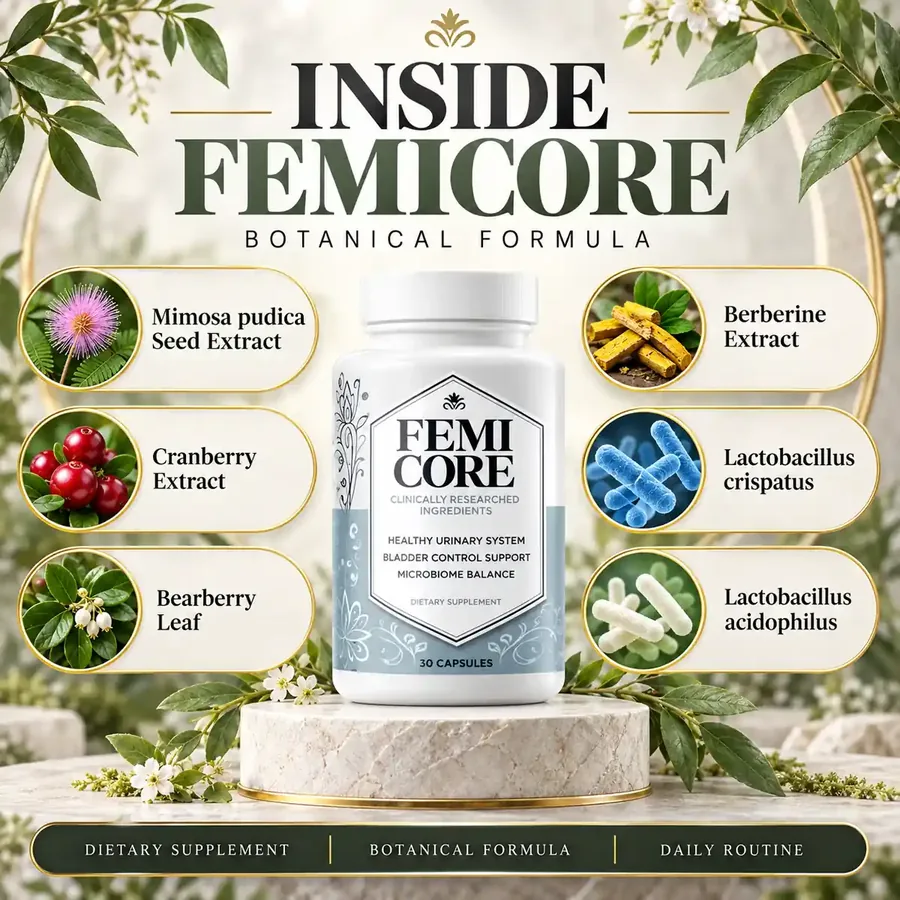
Berberine is the fourth and last line of FemiCore's 350 mg herbal blend. It comes after Mimosa pudica seed, cranberry and bearberry, and before the 50 mg probiotic blend starts.
A proprietary blend lists its lines from heaviest to lightest and prints only the total (21 CFR 101.36, supplement labeling). Last place therefore means berberine weighs the same as, or less than, every herb above it.
| Name on the label | Granular Berberine Hydrochloride Extract 8% (bark/root) |
|---|---|
| What it is | A yellow plant alkaloid from bark and root, as the hydrochloride salt |
| Place on the label | Line 4 of 4 in the 350 mg herbal blend |
| Amount per capsule | Not printed; line 4 of 4 in the 350 mg herbal blend. Label order caps it at 87.5 mg |
| Amount used in research | No urinary or bladder dose has been studied |
| Strength of evidence | No bladder or urinary trial found |
| Marketed or traditional use | A plant compound studied mostly for metabolic uses |
| Main caution | Mild stomach upset in studies; no liver signal on LiverTox. Ask a pharmacist about your medicines first. |
| Our note | At most 87.5 mg of the extract by label order. '8%' is printed without saying 8% of what. |
The arithmetic
How much berberine is in one FemiCore capsule?
The label does not say, but its order allows a ceiling: at most 87.5 mg of the berberine extract per capsule. That is 350 mg divided by 4, because line 4 can hold no more than a quarter of the blend.
The ceiling is reached only if all four herbs weigh exactly the same. If Mimosa pudica takes most of the 350 mg, berberine could be a few milligrams.
The "8%" adds a second unknown. If it means the extract holds 8% berberine by weight, the pure compound would top out near 7 mg. If it means something else, the figure cannot be worked out at all.
| Reading | Extract per capsule | Berberine itself |
|---|---|---|
| All four herbs equal (the maximum) | 87.5 mg | About 7 mg if "8%" is berberine content |
| Herbs fall by half each step | About 47 mg | About 4 mg on the same reading |
| "8%" means something other than content | At most 87.5 mg | Not printed |
The 8% figure
What does "8%" mean on a berberine label?
"8%" on a berberine label usually describes how much of an extract is the marker compound, but FemiCore's label does not define it. It prints the number without saying 8% of what, measured how.
The wording creates a small puzzle. Berberine hydrochloride sold as an isolated salt is normally close to pure, so an 8% figure fits better with a bark or root extract standardized to its berberine content. No certificate of analysis is published to settle it; the rest of the panel is on the FemiCore supplement facts page.
If the strength matters to you, ask the order desk at +1 (302) 200-3480 what the 8% refers to and which test measures it. Write down the answer and the date.
Evidence
Does berberine help the bladder?
No evidence shows that berberine helps bladder control or urinary health. We found no bladder, leak or urinary tract trial of berberine in the public health sources this site relies on.
Berberine's research sits mostly in metabolic questions, such as blood sugar and blood fats. None of our cited sources reviews that work, so we do not summarize its results here.
The sales page calls the formula "scientifically proven" without naming a study (FemiCore sales page). For berberine, that line has nothing behind it that we could find.
| Question | What we found |
|---|---|
| Bladder control or leaks | No trial found |
| Urinary tract infections | No trial found in our sources |
| Liver safety | No liver-injury signal on LiverTox (NIH LiverTox, Berberine) |
| Stomach side effects | Mostly mild, similar to placebo in controlled studies (NIH LiverTox, Berberine) |
| Drug interactions | Not covered by any source we could open |
| Pregnancy and nursing | Not covered by any source we could open |
FemiCore: from $49 a bottle30 capsules · 2, 3 or 6 bottles · free shipping on 6 · 60-day money-back guarantee
See packsSafety
Is berberine safe for the liver and stomach?
Berberine has not been linked to liver injury. LiverTox, the NIH database of drug and supplement liver harm, gives it likelihood score E, meaning an unlikely cause of clinically apparent liver injury (NIH LiverTox, Berberine).
The same entry reports that side effects in controlled studies were mostly mild and digestive, at about the rate seen with placebo.
LiverTox is a liver entry only. It does not cover interactions with medicines, use in pregnancy or long-term daily use.
Mild stomach upset
Take the capsule with the full 6-8 oz of water the label asks for, and note the day in a diary.
Upset that keeps coming back
Pause and talk to your doctor or pharmacist before the next bottle.
Yellow skin, dark urine or blood in urine
Stop and get checked. FDA lists these among serious reactions to report (FDA, Report a Supplement Problem).
Medicines
Can you take berberine with other medicines?
Ask a pharmacist first, because no source we could open covers berberine's interactions. That gap is a reason for caution, not a sign that interactions do not exist.
NCCIH warns that supplements in general can interact with medicines and that "natural" does not always mean safe (NCCIH, Using Supplements Wisely). Berberine also sits beside cranberry, whose evidence on warfarin is conflicting (NCCIH, Cranberry).
Bring the bottle, not a summary. The pharmacist can read the whole panel and match it against your list. Keep taking prescribed medicine while you ask, and never change a dose because of a supplement.
Pregnancy is the same story. No cited source covers berberine in pregnancy or while nursing, and the label asks pregnant or nursing mothers to consult a physician first. The supplements and medications guide lists the questions to bring.
Next lines
How does berberine compare with FemiCore's other herbs?
Berberine is the lightest possible herb in FemiCore and the one with the least link to the bladder. Cranberry, line 2, has the most research, though for repeat infections rather than leaks (Cochrane 2023, cranberries and UTI).
Bearberry, line 3, is the one with firm limits: EU guidance treats it as a one-week herb for adult women (EMA, Uvae ursi folium (bearberry leaf)). Read the bearberry leaf page next, or compare all nine lines on the FemiCore ingredients page.
FAQ
Berberine questions
Is the 8% on FemiCore's berberine line the berberine content?
Possibly, but the label does not say. It prints "Extract 8%" with no reference point or test method. If it is berberine content, a capsule holds at most about 7 mg of the compound, since the extract itself is capped at 87.5 mg by label order.
Will the berberine in FemiCore lower blood sugar?
There is no way to know from the label. The amount is not printed, and the ceiling is small. None of our cited sources reviews berberine and blood sugar. If you take diabetes medicine, ask your pharmacist before adding any supplement, and keep your usual glucose checks.
Does berberine interact with prescription medicines?
No source we could open covers berberine interactions, so we cannot list them. NCCIH says supplements in general can interact with medicines (NCCIH, Using Supplements Wisely). Show the FemiCore bottle to your pharmacist, and do not change any prescribed dose on your own.
Can berberine upset your stomach?
It can. LiverTox reports that side effects in controlled studies were mostly mild and digestive, at a rate similar to placebo (NIH LiverTox, Berberine). Taking the capsule with the full glass of water the label asks for is a sensible start. Persistent upset is a reason to pause and ask.
Is berberine safe during pregnancy?
No source we could open covers berberine in pregnancy or while nursing. The FemiCore label asks pregnant or nursing mothers to consult a physician before using it or any supplement. Treat that as a firm step, not a formality.
Does berberine harm the liver?
LiverTox, run by NIH, gives berberine likelihood score E: an unlikely cause of clinically apparent liver injury, with no link to raised liver enzymes (NIH LiverTox, Berberine). Yellowing skin or eyes after any supplement still needs a prompt check.
Why is berberine listed last in FemiCore?
Blend lines run from heaviest to lightest (21 CFR 101.36, supplement labeling). Last place means berberine weighs no more than any herb above it, so at most a quarter of the 350 mg blend, or 87.5 mg, and possibly far less.
Who wrote this
Written and reviewed by
Pages built from the label, the sales page and linked NIH, FDA, FTC, EMA and peer-reviewed sources.
Last updated . See our editorial standards and how we check reviews. This website is run by a U.S. stocking partner for FemiCore, not by the manufacturer or the label's distributor. We are paid when you buy through our order links.
Keep reading
More about FemiCore
U.S. stocking partner for FemiCore
Ready to try FemiCore?
Start with a check of your medicines, then pick a pack. Six bottles ship free and cost the least per bottle, and every pack sits inside the 60-day money-back window.
- Secure checkout
- 60-day money-back guarantee
- Ships from the U.S.