Blog · Cranberry
D-Mannose vs Cranberry: Which Has Evidence Behind It?
D-mannose vs cranberry is a comparison we can only make halfway. Cranberry has cited evidence: a Cochrane review found fewer symptomatic UTIs, with limits. Our sources hold nothing on D-mannose, so we make no claim for it. FemiCore lists a cranberry extract and no D-mannose.
Written by the FemiCore label benchUpdated · 4 min read
The short answer
Is D-mannose or cranberry better for urinary health?
We cannot rank them, because our sources cover only one. Cranberry has trial evidence behind it. D-mannose is not covered by any health source we cite.
That gap is not a verdict on D-mannose. It means we have no opened source, so we state no benefit, no dose and no risk for it. A pharmacist or clinician can speak to it with your history in hand.
What we can offer is a clear account of cranberry, so you know the yardstick another product must meet.
Cranberry
What does the evidence say about cranberry and UTIs?
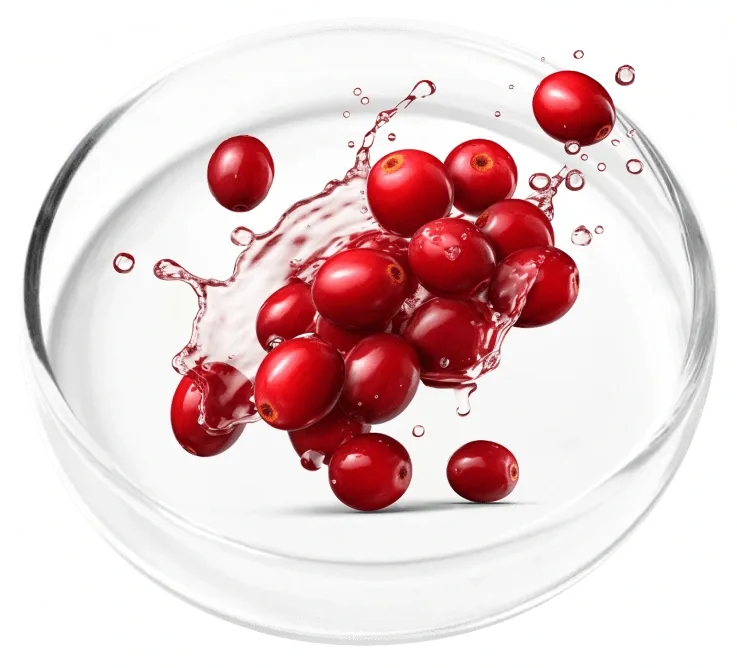
Cranberry may lower the chance of repeat UTIs in some groups. A Cochrane review of 50 trials and 8,857 people found fewer symptomatic, culture-verified UTIs (RR 0.70), and in women with recurrent UTIs (RR 0.74) (Cochrane 2023, cranberries and UTI).
It found little or no benefit in elderly institutionalised adults, pregnant women, or people with incomplete bladder emptying. NCCIH puts the lower risk at about 25% in women, with inconsistent findings, and says it is not a treatment for an existing UTI (NCCIH, Cranberry).
NICE is more careful. It says cranberry benefit is uncertain and shows no benefit evidence in older women (NICE NG112, recurrent UTI).
| Point | Cranberry | D-mannose |
|---|---|---|
| Cochrane review | Yes, RR 0.70 overall | Not in our sources |
| NCCIH fact sheet | Yes, about 25% | Not in our sources |
| Treats an active UTI | No | Not in our sources |
| On the FemiCore label | Yes, line 2 | No |
On the label
Does FemiCore contain D-mannose or only cranberry?
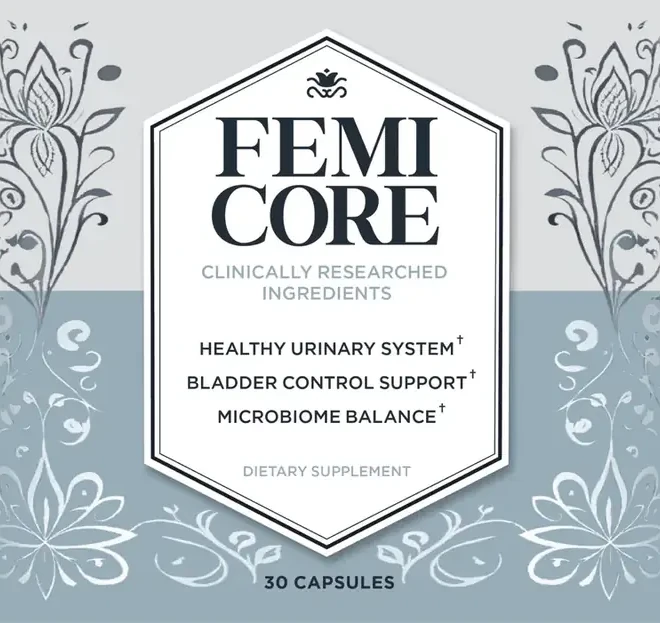
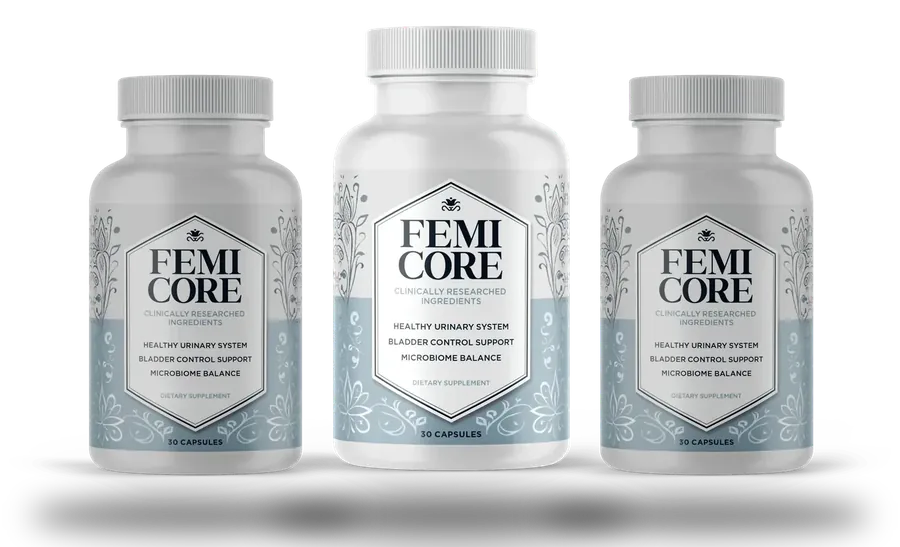
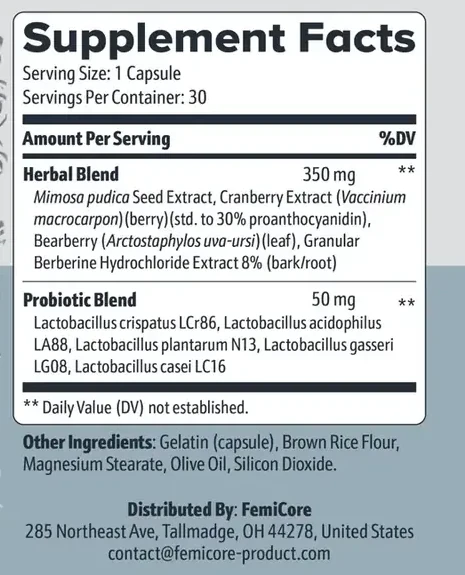
FemiCore contains cranberry and no D-mannose. The Herbal Blend lists Mimosa pudica seed extract, cranberry extract standardized to 30% proanthocyanidin, bearberry leaf and berberine extract. The other ingredients are gelatin, brown rice flour, magnesium stearate, olive oil and silicon dioxide.
Cranberry is line 2 of 4 in a 350 mg blend, so it weighs at most 175 mg (21 CFR 101.36, supplement labeling). The label prints no real weight, and the Cochrane result is about cranberry products, not a multi-ingredient capsule (Cochrane 2023, cranberries and UTI).
No trial of FemiCore itself is published. Read the cranberry page for the line-by-line view.
- Label front“Healthy Urinary System†”Structure/function wording, allowed with the FDA statement. Not a disease claim, and FDA did not review it. (21 CFR 101.93, structure/function claims)
- Label front“Bladder Control Support†”No trial of FemiCore was found. None of the nine lines has a bladder-control trial; the first-line care for leaks is pelvic floor and bladder training. (NICE NG123, incontinence in women) (Cochrane, PFMT for incontinence)
- Label front“Microbiome Balance†”Effects are strain-specific, and no CFU count is printed. The one strain with a registered trial (LCr86) was tested at a stated dose for a vaginal outcome. (ClinicalTrials.gov NCT06830122, LCr86)
- Label front“Clinically Researched Ingredients”Some ingredients have research for other uses (cranberry and repeat UTIs, berberine and blood sugar). That is not research on this capsule. (Cochrane 2023, cranberries and UTI) (NCCIH, Cranberry)
- Sales page“scientifically proven”No study is named on the sales text we reviewed. A claim like this needs competent and reliable evidence. (FTC, Health Products Compliance Guidance)
- Sales page“The Natural Breakthrough Formula That Supports a Strong Bladder”Marketing language. Bearberry is a one-week herb in EU guidance, not a daily, long-term one. (EMA, Uvae ursi folium (bearberry leaf))
- Sales page60-day money-back badgesThe images show 60 days; the written terms are not printed on the sales text. We count from the date of purchase. (FemiCore sales page)
Claims as printed on the label and the sales page (FemiCore sales page). Health claims need competent and reliable scientific evidence (FTC, Health Products Compliance Guidance).
FemiCore: from $49 a bottle30 capsules · 2, 3 or 6 bottles · free shipping on 6 · 60-day money-back guarantee
See packsSafety first
What if you think you have a UTI right now?
See a clinician, because neither cranberry nor D-mannose is a treatment for an active infection. Burning, a strong urge, frequent small amounts, cloudy or red urine and pelvic pain are the usual signs (Mayo Clinic, UTI).
Fever, shaking chills, nausea or back and side pain can mean the kidneys are involved and need same-day care (Mayo Clinic, UTI). CDC notes that antibiotics are used for confirmed bacterial infections (CDC, About UTIs).
- Blood in your urine, or passing clotsPink, red or cola-colored urine needs a check every time; clots need a provider right away.Same day
- Fever, chills, nausea or pain in your side or backWith urinary symptoms these can mean a kidney infection. Contact a provider the same day.Same day
- You cannot pass urineBeing unable to urinate needs a provider right away.Same day
- Burning, frequent small trips, urgency with an empty bladderCommon bladder-infection signs. Infections need diagnosis; cranberry does not treat them.Book a visit
- Sudden urges or leaks during normal activitiesNIDDK advises seeing a professional right away; leaks are common and often treatable.Book a visit
- Any vaginal bleeding after menopauseA reason to call a provider, whatever the bladder is doing.Book a visit
Severe?Severe pain, high fever with shaking chills or vomiting, or no urine at all: get urgent care now, or call 911 in an emergency.
Signs from MedlinePlus, CDC, NIDDK and Cleveland Clinic (MedlinePlus, Blood in urine) (CDC, About UTIs) (NIDDK, bladder control problems in women) (Cleveland Clinic, postmenopause). A supplement never replaces a check for these.
Deciding
How should you choose between the two?
Choose with a clinician who knows your history. Two or more UTIs in 6 months, or three in 12, counts as recurrent, and NICE lists behavioral steps first (NICE NG112, recurrent UTI).
Ask what each option has been studied for, in whom, and at what dose. If an answer rests on a sales page, ask for the study.
Write down your trips and any burning in a three-day diary first. A clinician can then see whether the pattern points to infection, to bladder habits or to something else, and which of those a supplement could even address (Mayo Clinic, incontinence treatment).
The FemiCore sales page shows $79 a bottle on two, $69 on three and $49 on six. Keep taking any prescribed medicine.
U.S. stocking partner for FemiCore
Ready to try FemiCore?
Start with a check of your medicines, then pick a pack. Six bottles ship free and cost the least per bottle, and every pack sits inside the 60-day money-back window.
- Secure checkout
- 60-day money-back guarantee
- Ships from the U.S.
FAQ
D-mannose and cranberry questions, answered
Can I take D-mannose and cranberry together?
Our sources do not cover D-mannose, so we cannot speak to combining them. Ask a pharmacist, especially if you take warfarin, where cranberry evidence is conflicting (NCCIH, Cranberry).
Is cranberry a treatment for a bladder infection?
No. NCCIH does not recommend cranberry as a treatment for an existing UTI. It may lower repeat risk in some women, so an active infection still needs a clinician.
Which works faster for UTI symptoms?
Neither is shown to treat symptoms. Cited evidence for cranberry concerns fewer repeat infections over time, not quick relief, so waiting on either can delay care.
Do menopause and UTIs change the choice?
They can. Menopause raises UTI risk through lower estrogen and changes in vaginal bacteria (Mayo Clinic, UTI). NICE says vaginal estrogen may be considered, so raise it with your clinician.
Why does the label not list D-mannose?
The label gives no reason. It names nine ingredients and D-mannose is not among them, so any D-mannose claim on a FemiCore listing is not supported by the bottle.
Who wrote this
Written and reviewed by
Pages built from the label, the sales page and linked NIH, FDA, FTC, EMA and peer-reviewed sources.
Last updated . See our editorial standards and how we check reviews. This website is run by a U.S. stocking partner for FemiCore, not by the manufacturer or the label's distributor. We are paid when you buy through our order links.
Keep reading
More about FemiCore
U.S. stocking partner for FemiCore
Ready to try FemiCore?
Start with a check of your medicines, then pick a pack. Six bottles ship free and cost the least per bottle, and every pack sits inside the 60-day money-back window.
- Secure checkout
- 60-day money-back guarantee
- Ships from the U.S.