Blog · Plant ingredients
Plant-Based Urinary Support: What the FemiCore Label Really Lists
Plant-based urinary support means products built from botanicals, such as cranberry, bearberry leaf and berberine, rather than drugs. Natural does not mean harmless, and plant sources do not make a product vegan. FemiCore's four herbal lines are plants, but its capsule shell is gelatin, which is animal-derived, so the bottle is not vegetarian or vegan.
Written by the FemiCore label benchUpdated · 5 min read
Definition
What does plant-based urinary support mean?
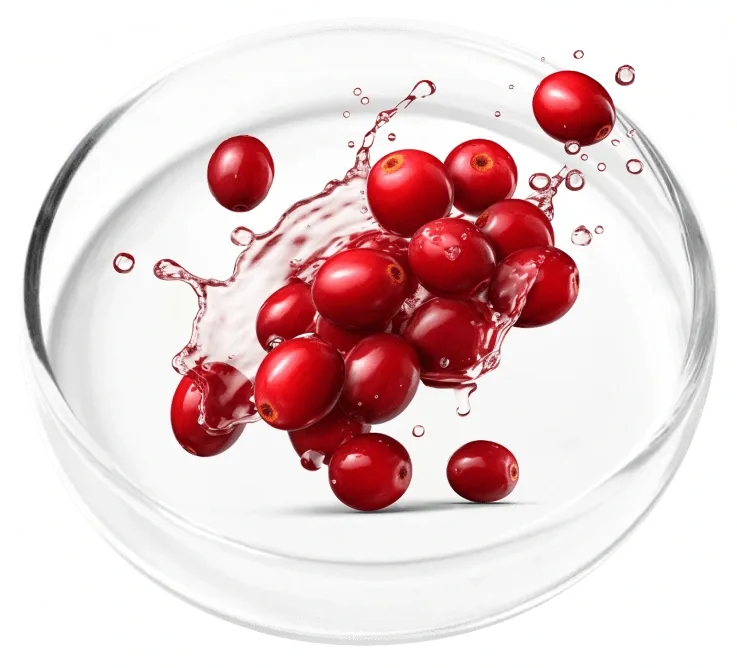
Plant-based urinary support describes supplements whose active ingredients are extracts of plants. For the urinary tract the usual names are cranberry berry, bearberry leaf and berberine from bark or root.
The phrase is marketing, not a regulated category. No agency certifies a supplement as plant-based, and the wording says nothing about dose, purity or proof.
It also hides a second question: what else is in the capsule? A product can be rich in plant extract and still carry animal ingredients in the shell, or live bacteria in the mix.
Natural sources are not always safe. The National Center for Complementary and Integrative Health reminds readers that "natural" does not always mean safe, and that supplements can interact with medicines (NCCIH, Using Supplements Wisely).
The four herbs
Which FemiCore ingredients are plants?
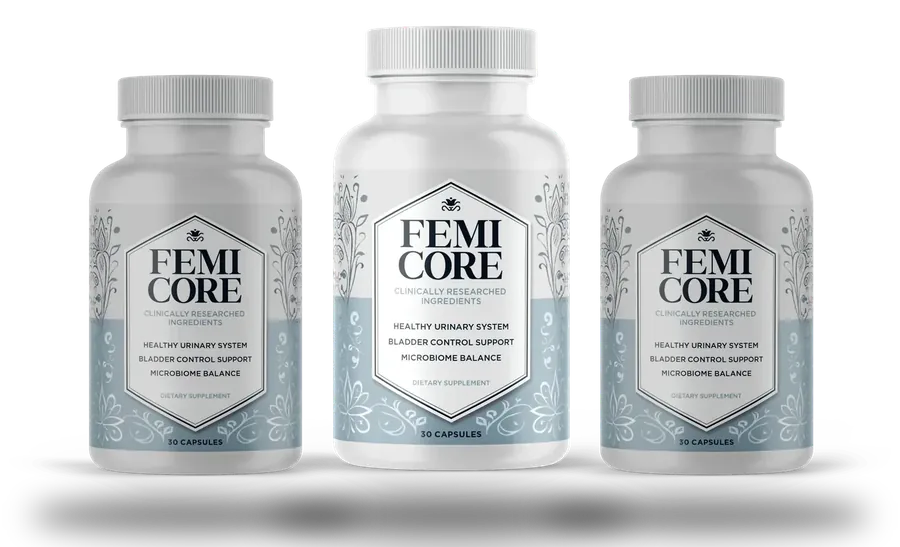
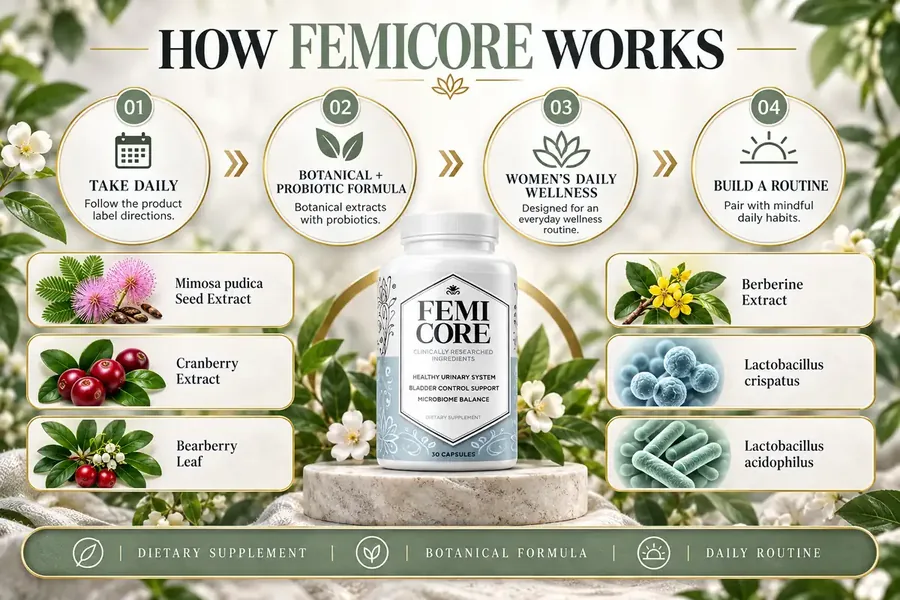
Four lines of the herbal blend are plants: Mimosa pudica seed extract, cranberry extract, bearberry leaf and berberine hydrochloride extract from bark or root. The blend weighs 350 mg in total, and each line is capped by its label order.
The bars below show those ceilings. A ceiling is the most a line could weigh, not what it does weigh.
Of the four, cranberry has the best human record, with a Cochrane review finding fewer repeat infections in women who get them often (Cochrane 2023, cranberries and UTI). Bearberry has a European monograph that limits it to one week (EMA, Uvae ursi folium (bearberry leaf)). Berberine shows no liver signal in a medical database (NIH LiverTox, Berberine). For Mimosa pudica seed we found no human trial or fact sheet, so its safety record is thin.
The shell
Is a plant-based urinary supplement always vegan?
No. Plant-based describes where the active extracts come from. That is not the same as vegan, which covers the whole product, including the shell and every other ingredient.
Reading the other-ingredients line takes ten seconds and settles the question.
FemiCore's other ingredients are gelatin (the capsule), brown rice flour, magnesium stearate, olive oil and silicon dioxide. Gelatin is animal-derived. The sales page shows a vegetarian badge, and the label contradicts it.
| Herbal blend (4 lines) | Plant extracts |
|---|---|
| Probiotic blend (5 strains) | Live bacteria, not plants |
| Capsule shell | Gelatin, animal-derived |
| Brown rice flour, olive oil | Plant |
Anyone who avoids animal products should choose a different bottle. That is a plain fact from the label, not a flaw in the plants.
The probiotic strains are bacteria, which are neither plants nor animals. Many strict diets accept them, but the gelatin shell is the deciding point here.
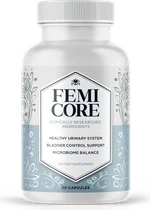
FemiCore: from $49 a bottle30 capsules · 2, 3 or 6 bottles · free shipping on 6 · 60-day money-back guarantee
See packsSafety
Is plant-based urinary support safe for everyone?
No. Herbs can cause stomach upset and can be unsuitable in some conditions. The European bearberry monograph names nausea, vomiting and stomach ache, and says women with kidney disorders must not use it (EMA, Uvae ursi folium (bearberry leaf)).
Cranberry is generally safe by mouth, but the evidence on warfarin is conflicting, so people on that medicine should ask first (NCCIH, Cranberry). Pregnancy and berberine interactions are not established in our sources. Ask a pharmacist.
The sales page leans on the word natural. Treat it as a description of origin, never as a safety rating, and read the caution printed on the bottle before you open it.
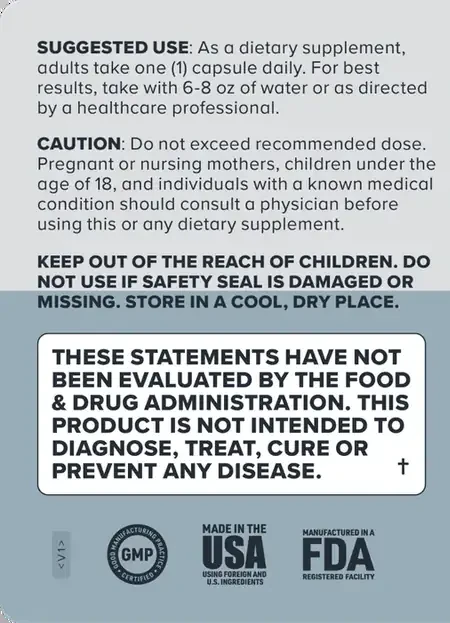
Keep taking prescribed medicine as directed. A botanical never replaces it, and the label asks pregnant or nursing mothers, under-18s and people with a medical condition to consult a physician first.
Decide
How do you choose plant-based urinary support?
Choose by the facts on the label, not the color of the packaging. Ask what each plant is, how much is inside, and what the shell is made from.
Also ask what the plant part is. A berry, a leaf and a bark behave differently, and a vendor illustration of a berry does not prove which part sits in the capsule. The label names cranberry as berry, bearberry as leaf and berberine as bark or root.
If leaks or urgency are your goal, first-line care is pelvic floor training and bladder training, not an extract (NICE NG123, incontinence in women). A supplement can be added to that plan, never swapped for it.
FemiCore is $79 a bottle on two, $69 on three and $49 on six. Our ingredient guide covers every line.
U.S. stocking partner for FemiCore
Ready to try FemiCore?
Start with a check of your medicines, then pick a pack. Six bottles ship free and cost the least per bottle, and every pack sits inside the 60-day money-back window.
- Secure checkout
- 60-day money-back guarantee
- Ships from the U.S.
FAQ
Plant-based support questions, answered
Is cranberry the same as a plant-based antibiotic?
No. Cranberry is a fruit extract, not an antibiotic. It may lower the chance of repeat infections in some women, and it never treats an infection already under way.
Why is a plant-based capsule made of gelatin?
Gelatin is a cheap, common capsule material. A product can use plant extracts inside and an animal-derived shell outside, so check the other-ingredients line.
Do plant extracts need a doctor's advice?
Yes, when you take medicines, are pregnant or nursing, or have kidney problems. Plants contain active compounds, and a pharmacist can check them against your list.
Who wrote this
Written and reviewed by
Pages built from the label, the sales page and linked NIH, FDA, FTC, EMA and peer-reviewed sources.
Last updated . See our editorial standards and how we check reviews. This website is run by a U.S. stocking partner for FemiCore, not by the manufacturer or the label's distributor. We are paid when you buy through our order links.
Keep reading
More about FemiCore
U.S. stocking partner for FemiCore
Ready to try FemiCore?
Start with a check of your medicines, then pick a pack. Six bottles ship free and cost the least per bottle, and every pack sits inside the 60-day money-back window.
- Secure checkout
- 60-day money-back guarantee
- Ships from the U.S.