Blog · Microbiome basics
Probiotics and Prebiotics for Women: The Difference, Plainly
Probiotics and prebiotics for women are two different things: probiotics are live bacteria, and prebiotics are the fibers that feed them. FemiCore's label lists five Lactobacillus strains in a 50 mg probiotic blend and no prebiotic fiber. Effects are strain-specific, and the label prints no cell count, so the benefit is unproven.
Written by the FemiCore label benchUpdated · 5 min read

The difference
What is the difference between probiotics and prebiotics?
Probiotics are live microorganisms taken for a possible benefit. Prebiotics are food components, mostly fibers, that bacteria already in the gut can use.
Picture a garden. A probiotic is seed you add. A prebiotic is the fertilizer. A product that carries both is sometimes called synbiotic, though that word is a marketing label, not a promise.
The NIH stresses that probiotic effects are strain-specific and that products vary in what they hold (NCCIH, Probiotics). Prebiotic claims need the same scrutiny: ask which fiber, how much, and for what outcome.
Neither word means "safe for everyone". Risks from probiotics are higher with severe illness or weak immunity.
The words also get mixed up with postbiotics, which are products of bacteria rather than the bacteria themselves. FemiCore lists none of these either, only live strains by code.
For women
Why are probiotics and prebiotics marketed to women?
Because the vagina and the lower urinary tract each host their own bacterial communities, and Lactobacillus dominates the usual vaginal pattern.
Research describes five vaginal community types. Four are Lactobacillus-dominated (crispatus, gasseri, iners and jensenii), and one is more diverse, which is more common in Black and Hispanic women and is not automatically abnormal (Ravel et al. 2011, vaginal microbiome).
That map is real science. The jump from it to a swallowed capsule is not proven. A vaginal L. crispatus product lowered bacterial vaginosis recurrence in one trial, but it was applied vaginally and did not look at the bladder (Cohen et al. 2020, Lactin-V trial).
Recurrent urinary infections are a separate issue. NICE finds lactobacillus evidence for them inconclusive (NICE NG112, recurrent UTI).
So the honest summary is this: the community science is solid, the leap to a swallowed capsule is open, and the leap to the bladder is wider still.
On the label
What does FemiCore list for probiotics and prebiotics?
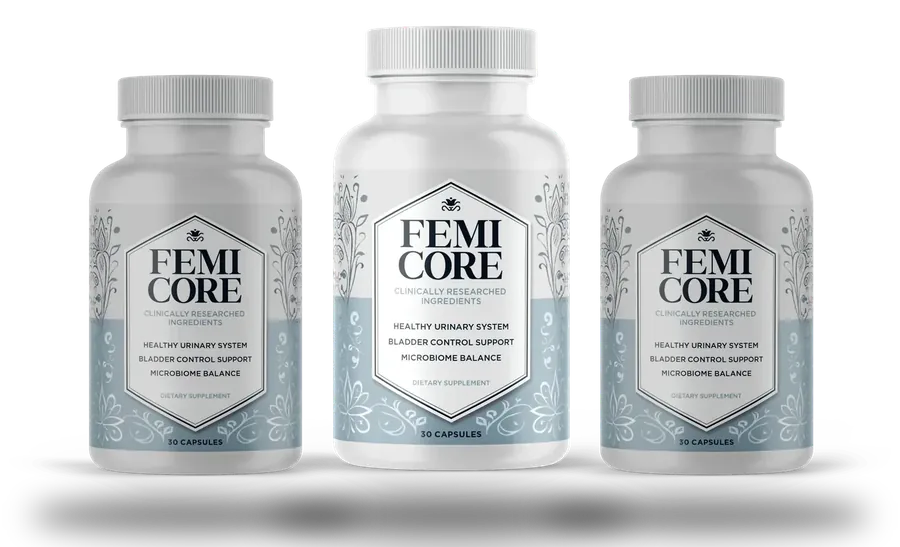
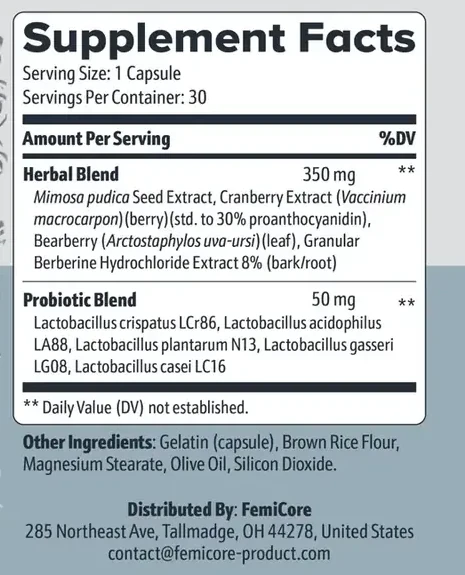
FemiCore lists a probiotic blend and no prebiotic. The probiotic blend weighs 50 mg and holds five named strains, shown below.
 Herbal 1/4Mimosa pudica≤ 350 mg
 Herbal 2/4Cranberry≤ 175 mg
 Herbal 3/4Bearberry≤ 116.7 mg
 Herbal 4/4Berberine≤ 87.5 mg
 Strain 1/5L. crispatus LCr86≤ 50 mg
 Strain 2/5L. acidophilus LA88≤ 25 mg
 Strain 3/5L. plantarum N13≤ 16.7 mg
 Strain 4/5L. gasseri LG08≤ 12.5 mg
 Strain 5/5L. casei LC16≤ 10 mg
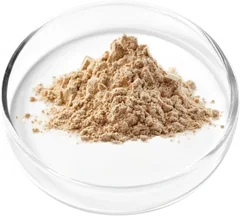
Vendor petri-dish illustrations from the sales page, one per label line; not photos of the capsule contents. Weights are label-order ceilings.
Label order caps the strains at 50, 25, 16.7, 12.5 and 10 mg. These are ceilings only, and the label prints no CFU count (NIH ODS, Probiotics).
| Item | On the label? |
|---|---|
| Live strains | Five, by code |
| Prebiotic fiber | Not listed |
| Cell count at end of shelf life | Not printed |
| Trial of the finished capsule | None found |

FemiCore: from $49 a bottle30 capsules · 2, 3 or 6 bottles · free shipping on 6 · 60-day money-back guarantee
See packsFood first
Can food supply prebiotics for women?
Yes. Ordinary plant foods carry fibers that gut bacteria use, including oats, beans, onions, garlic and bananas. No supplement is needed to eat them.
Our sources do not rank foods for urinary health, so we make no claim there. Fiber can ease constipation, though, and constipation can add pressure on the bladder, which is a practical reason to watch it.
Bring any change slowly. Add one new fiber food at a time and watch how your stomach responds over a few days. Drink water alongside, and stop if cramps or swelling persist. A sudden jump in fiber can cause gas, and extra water helps.
If you take medicines, are pregnant or have a long-term condition, ask your clinician before a new supplement (NCCIH, Using Supplements Wisely).
Decide
What should you ask before buying probiotics for women?
Ask four things: which strains, what count at end of shelf life, who made it, and what trial supports the exact product.
Also ask how it should be stored. Some live products need refrigeration, and a bottle left in a hot car or a damp bathroom may not hold what the label says (NIH ODS, Probiotics). FemiCore asks for a cool, dry place.
FemiCore answers the first and not the others. Weigh that against $79 a bottle on two, $69 on three and $49 on six. Our microbiome basics guide has the full picture.
Keep taking prescribed medicine as directed.
The label also asks pregnant or nursing mothers, under-18s and people with a known medical condition to consult a physician before use.
U.S. stocking partner for FemiCore
Ready to try FemiCore?
Start with a check of your medicines, then pick a pack. Six bottles ship free and cost the least per bottle, and every pack sits inside the 60-day money-back window.
- Secure checkout
- 60-day money-back guarantee
- Ships from the U.S.
FAQ
Probiotic and prebiotic questions, answered
Is a synbiotic better than a probiotic alone?
No source we cite shows that. A synbiotic is simply both parts in one product, and each part still needs its own evidence for the exact strain and fiber used.
Do yogurt and fermented foods count as probiotics?
Some carry live cultures, but strains and numbers vary and are rarely printed. Food is a fine habit, yet it cannot be matched to the strains on a supplement label.
Should women with weak immunity use probiotics?
Ask first. Risks are higher with severe illness or weak immunity, and some products held organisms not on the label. A clinician can weigh your situation.
Who wrote this
Written and reviewed by
Pages built from the label, the sales page and linked NIH, FDA, FTC, EMA and peer-reviewed sources.
Last updated . See our editorial standards and how we check reviews. This website is run by a U.S. stocking partner for FemiCore, not by the manufacturer or the label's distributor. We are paid when you buy through our order links.
Keep reading
More about FemiCore


U.S. stocking partner for FemiCore
Ready to try FemiCore?
Start with a check of your medicines, then pick a pack. Six bottles ship free and cost the least per bottle, and every pack sits inside the 60-day money-back window.
- Secure checkout
- 60-day money-back guarantee
- Ships from the U.S.