Blog · Probiotics
Probiotics for UTI: What the Evidence Does and Does Not Show
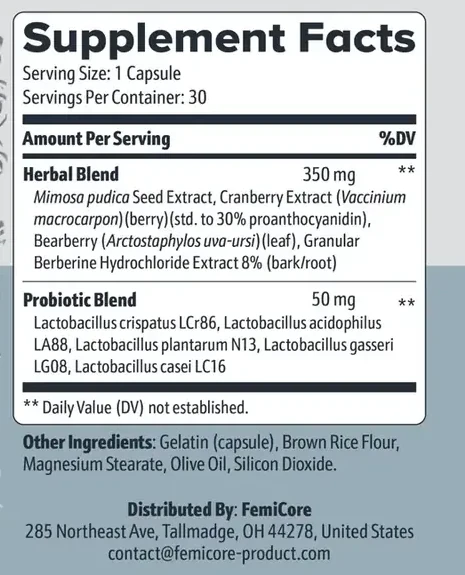
Probiotics for UTI are not an established tool. NICE calls the evidence for lactobacillus inconclusive for recurrent infections. Effects depend on the strain, and the best-known vaginal results used a single vaginal strain. FemiCore lists five strains in a 50 mg blend with no CFU count and makes no UTI claim.
Written by the FemiCore label benchUpdated · 4 min read

The short answer
Do probiotics for UTI actually work?
Probiotics for UTI have not been shown to work reliably. NICE judged the lactobacillus evidence inconclusive for preventing recurrent infections, and cranberry's benefit uncertain (NICE NG112, recurrent UTI).
That does not mean the idea is foolish. Healthy vaginal communities are mostly Lactobacillus-dominated, so researchers study whether adding those microbes helps (Ravel et al. 2011, vaginal microbiome). The studies are simply not firm enough yet for a guideline to rely on.
A probiotic is also not an antibiotic. It cannot clear an active infection, and burning or fever needs a clinician.
Think of it like seed packets. A packet that says only "flower seeds" tells you little. One that names the plant, the count and the sowing date lets you judge the result. Probiotic labels work the same way. The more they name, the more you can check.
Strain matters
Why does the strain matter for probiotics and UTI?
The strain matters because probiotic effects are strain-specific, so results for one strain tell you little about another. The NIH fact sheet says recommendations should name the strain, not just the genus (NCCIH, Probiotics).
The best-known vaginal result is Lactin-V, a single L. crispatus strain given vaginally. It cut bacterial vaginosis recurrence to about 30% against 45% (Cohen et al. 2020, Lactin-V trial). That was a vaginal product, for BV, not an oral capsule for the bladder.
FemiCore names LCr86 for crispatus. One industry trial of LCr86 was completed with 80 women, using 10 billion CFU by mouth for 8 weeks, and it measured a vaginal score, with no results posted (ClinicalTrials.gov NCT06830122, LCr86).
GenusLactobacillus
Speciescrispatus
Strain codeLCr86
A probiotic's effect belongs to the strain, the code after the species name, not to the species in general (NCCIH, Probiotics) (NIH ODS, Probiotics). Two strains of one species can behave differently, so research on "L. crispatus" in general does not transfer to LCr86.
| Strain on the label | Place | Most per capsule | Strain-level research we found | Caution |
|---|---|---|---|---|
| Lactobacillus crispatus LCr86 | 1 of 5 | at most 50 mg | One registered trial gave 10 billion CFU a day orally (vaginal outcome) | Ask first if your immune system is weakened. |
| Lactobacillus acidophilus LA88 | 2 of 5 | at most 25 mg | No published trial found for this strain code | Ask first if your immune system is weakened. |
| Lactobacillus plantarum N13 | 3 of 5 | at most 16.7 mg | No published trial found for this strain code | Ask first if your immune system is weakened. |
| Lactobacillus gasseri LG08 | 4 of 5 | at most 12.5 mg | No published trial found for this strain code | Ask first if your immune system is weakened. |
| Lactobacillus casei LC16 | 5 of 5 | at most 10 mg | No published trial found for this strain code | Ask first if your immune system is weakened. |
Searched October 2026. LCr86 has one completed placebo trial (80 women, 10 billion CFU a day by mouth, 8 weeks, vaginal Nugent score) with no results posted (ClinicalTrials.gov NCT06830122, LCr86). "Lactobacillus" species were renamed in 2020 (for example L. casei is now Lacticaseibacillus casei); labels often keep the old names.
Reading the label
What does FemiCore print about its probiotics?
FemiCore prints a 50 mg probiotic blend of five strains: LCr86, LA88, N13, LG08 and LC16. It prints no single weight and no CFU count.
The label order caps each strain: line 1 at most 50 mg, line 2 at most 25 mg, line 3 about 17 mg, line 4 12.5 mg and line 5 10 mg. These are ceilings, and a lower line could be tiny.
Weight is not live cells. NIH says label weight includes dead cells and advises looking for a CFU count at end of shelf life (NIH ODS, Probiotics). FemiCore has none to show. For comparison, the one LCr86 trial used 10 billion CFU, a figure the FemiCore label never states for its own capsule.
| Detail | On the FemiCore label |
|---|---|
| Strain codes | Yes, all five |
| Blend total | Yes, 50 mg |
| CFU at end of shelf life | Not printed |
| Trial for the finished capsule | None found |

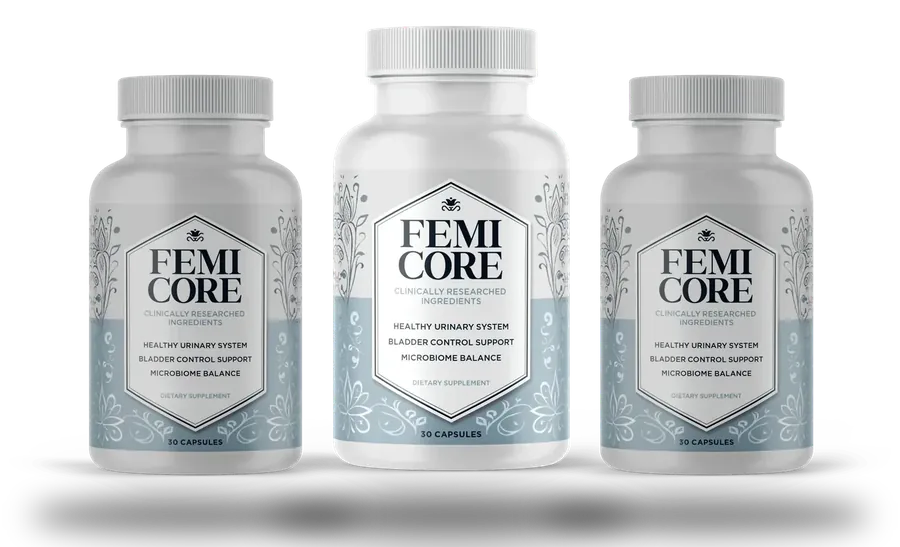
FemiCore: from $49 a bottle30 capsules · 2, 3 or 6 bottles · free shipping on 6 · 60-day money-back guarantee
See packsSafety
Are probiotics for UTI safe to try?
Probiotics are usually well tolerated, but the risk is higher with severe illness or a weakened immune system (NCCIH, Probiotics). Some products have held organisms not on the label. If either concern applies, ask a physician first.
The FemiCore caution adds pregnancy, nursing, under 18 and any known medical condition. With repeat infections, see your clinician rather than adding a capsule and waiting. Keep taking any prescribed medicine.
Our urinary microbiome guide explains the communities in more depth. If you decide to try FemiCore, the order panel lists the packs. The 60-day badge on the sales page gives a window to judge the capsules yourself.
U.S. stocking partner for FemiCore
Ready to try FemiCore?
Start with a check of your medicines, then pick a pack. Six bottles ship free and cost the least per bottle, and every pack sits inside the 60-day money-back window.
- Secure checkout
- 60-day money-back guarantee
- Ships from the U.S.
FAQ
Probiotic and UTI questions, answered
Which probiotic is best for UTI prevention?
No cited source names a best one. NICE found lactobacillus evidence inconclusive, and effects are strain-specific. Ask your clinician before choosing a product, and look for named strains plus a CFU count at end of shelf life.
Can I take probiotics while on antibiotics for a UTI?
Ask the prescriber or a pharmacist, since timing advice varies and the cited sources here do not set a rule. Finish the antibiotic as directed, and do not swap it for a supplement.
Do probiotics change vaginal bacteria?
Some products aim to, and the Lactin-V trial changed outcomes for BV when given vaginally. An oral capsule is a different route, and its effect on vaginal communities is not established for most strains.
What is a CFU and why does it matter?
CFU means colony-forming units, a count of live organisms. Weight alone includes dead cells, so NIH advises a CFU count at end of shelf life. FemiCore prints no CFU figure.
Are yogurt and fermented foods the same as a probiotic capsule?
Not necessarily. Foods may contain live cultures, but strain and count vary and are often unlisted. NIH stresses that effects belong to specific strains. Foods are fine to enjoy, yet they are not a tested substitute for any UTI plan.
Who wrote this
Written and reviewed by
Pages built from the label, the sales page and linked NIH, FDA, FTC, EMA and peer-reviewed sources.
Last updated . See our editorial standards and how we check reviews. This website is run by a U.S. stocking partner for FemiCore, not by the manufacturer or the label's distributor. We are paid when you buy through our order links.
Keep reading
More about FemiCore

U.S. stocking partner for FemiCore
Ready to try FemiCore?
Start with a check of your medicines, then pick a pack. Six bottles ship free and cost the least per bottle, and every pack sits inside the 60-day money-back window.
- Secure checkout
- 60-day money-back guarantee
- Ships from the U.S.