Blog · Basics
What Is FemiCore Used For? The Label Answer and the Evidence Answer
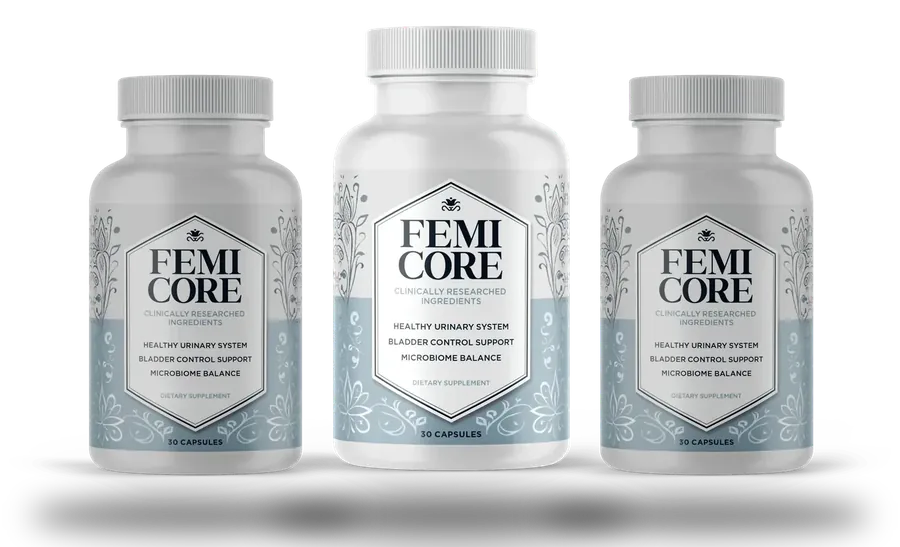
What is FemiCore used for? Adult women take one capsule a day as a dietary supplement aimed at a healthy urinary system, bladder control support and microbiome balance, per the label. It is not used to treat an infection or any disease. The label claims are unproven for the finished capsule.
Written by the FemiCore label benchUpdated · 4 min read
The uses
What is FemiCore used for, according to the label?
FemiCore is used as a daily dietary supplement for urinary support. The label says "Healthy Urinary System", "Bladder Control Support" and "Microbiome Balance", each with a dagger for the FDA statement.
Those are structure/function lines. They describe a hoped-for effect on normal body function, and the label must add that the FDA has not evaluated them (21 CFR 101.93, structure/function claims).
The directions are short: adults take one capsule daily with 6-8 oz of water, or as a healthcare professional directs. No time of day and no food rule is printed.
In plain words, the use is a habit: one capsule, one glass of water, every day. A bottle holds 30 capsules, so the habit runs 30 days per bottle. Nothing on the label asks you to change anything else, which is why the other steps below matter.
The seller's sales page adds a line, "designed to support bladder health by targeting the microbiome imbalance". We quote it and test it later.
The limits
What is FemiCore not used for?
FemiCore is not used to treat an infection, cure incontinence or replace prescribed care. A supplement may not make disease claims, and a product that does is regulated as a drug (21 CFR 101.93, structure/function claims).
That matters for urinary infections. Cranberry may lower the chance of repeat infections in some women, but it is not a treatment for one you have now (NCCIH, Cranberry). A burning urge to urinate with fever or back pain needs a clinician, not a capsule (CDC, About UTIs).
| Situation | Is FemiCore a fit? |
|---|---|
| Daily urinary support routine | Matches the label wording |
| Active infection signs | No, see a clinician |
| Blood in the urine | No, get checked |
| Pregnancy or nursing | Ask a physician first |
| Under age 18 | Ask a physician first |
The problems
Which bladder problems could FemiCore be used with?
FemiCore could sit beside the first-line steps for several leak types, but it is not a replacement for them. Leaks come in stress, urge, mixed, overflow and functional types, and each has a different first step.
The type decides the plan. Training for the pelvic floor leads for stress leaks, bladder training for urgency, and a clinician visit for overflow. Mayo notes that incontinence is not an inevitable part of aging (Mayo Clinic, urinary incontinence causes).
Stress leaks
A spurt when you cough, sneeze, laugh, lift or jump.
First stepsSupervised pelvic floor muscle training for at least 3 months.
Urge leaks
A sudden, strong need to go, then leaking on the way.
First stepsBladder training for at least 6 weeks; try less caffeine.
Mixed
Stress and urge leaks together.
First stepsPelvic floor training plus bladder training.
Overflow
Dribbling from a bladder that does not empty well.
First stepsNeeds a clinician's check; Kegels help less here.
Functional
The bladder works, but reaching the toilet in time is hard.
First stepsMobility, clothing and bathroom access come first.
Types from Mayo Clinic and MedlinePlus (Mayo Clinic, urinary incontinence causes) (MedlinePlus, Urinary Incontinence); first steps from NICE and Cochrane (NICE NG123, incontinence in women) (Cochrane, PFMT for incontinence) (Mayo Clinic, Kegel exercises). A clinician can tell which type you have.
Think of the capsule as an add-on. A woman with stress leaks gets more from three months of supervised training than from any bottle, and the same is true for bladder training with urgency (NICE NG123, incontinence in women). Caffeine, alcohol and constipation can also drive symptoms, so those are worth checking first.
Our who FemiCore is for page helps you match your pattern to a next step.
FemiCore: from $49 a bottle30 capsules · 2, 3 or 6 bottles · free shipping on 6 · 60-day money-back guarantee
See packsThe proof
Is there proof that FemiCore does what it is used for?
There is no proof for the finished capsule. The ingredients have been studied one at a time, and only cranberry has a sizable record, mostly for repeat infections.
A 2023 Cochrane review pooled 50 trials and found fewer symptomatic infections with cranberry products, though not in every group (Cochrane 2023, cranberries and UTI). That is about cranberry products, not this blend.
Berberine has a liver-safety entry and no bladder data (NIH LiverTox, Berberine), and for mimosa pudica seed we found no public health source. The probiotic claim rests on strain codes, with one trial record for LCr86 (ClinicalTrials.gov NCT06830122, LCr86).
Starting
Who should check with a clinician before using FemiCore?
A short check costs little. Ask your pharmacist to read the label with your medicine list, and bring the nine ingredient names along.
Anyone pregnant, nursing, under 18 or living with a known medical condition should check first, as the label says. So should anyone on warfarin or a daily prescription, since supplements can interact with medicines (NCCIH, Using Supplements Wisely).
Keep taking prescribed medicine as directed. Report any serious reaction through the FDA portal (FDA, Report a Supplement Problem).
If you go ahead, a bottle gives a 30-day trial. Packs run from two bottles at $79 each to six at $49 each.
U.S. stocking partner for FemiCore
Ready to try FemiCore?
Start with a check of your medicines, then pick a pack. Six bottles ship free and cost the least per bottle, and every pack sits inside the 60-day money-back window.
- Secure checkout
- 60-day money-back guarantee
- Ships from the U.S.
FAQ
FemiCore uses questions, answered
Is FemiCore used for urinary tract infections?
No. The label makes no infection claim, and a supplement cannot treat one. Seek care for burning, fever or back pain. Cranberry research covers repeat infection risk in some groups only.
Is FemiCore used for menopause symptoms?
The label does not mention menopause. Menopause can change bladder habits (Cleveland Clinic, postmenopause), but FemiCore has no test in that setting. Ask a clinician about options for your symptoms.
Do men use FemiCore?
The label does not say. Bearberry guidance covers adult women only (EMA, Uvae ursi folium (bearberry leaf)), so the formula looks aimed at women. A man should ask a clinician before trying it.
Who wrote this
Written and reviewed by
Pages built from the label, the sales page and linked NIH, FDA, FTC, EMA and peer-reviewed sources.
Last updated . See our editorial standards and how we check reviews. This website is run by a U.S. stocking partner for FemiCore, not by the manufacturer or the label's distributor. We are paid when you buy through our order links.
Keep reading
More about FemiCore



U.S. stocking partner for FemiCore
Ready to try FemiCore?
Start with a check of your medicines, then pick a pack. Six bottles ship free and cost the least per bottle, and every pack sits inside the 60-day money-back window.
- Secure checkout
- 60-day money-back guarantee
- Ships from the U.S.