Blog · Choosing a supplement
Women's Urinary Health Supplements: What to Check Before You Buy
Women's urinary health supplements are capsules, powders or drinks that combine plant extracts, vitamins or probiotics and are sold to support the urinary tract. They are not approved by the FDA before sale. Cranberry has the strongest research of the usual ingredients, while most others have little. Compare amounts, strain codes and cell counts, not front-label phrases.
Written by the FemiCore label benchUpdated · 5 min read
The category
What are women's urinary health supplements?
Women's urinary health supplements are dietary products sold for bladder comfort or urinary tract upkeep. Most come as capsules. The ingredient lists tend to repeat: cranberry, D-mannose, herbal leaf extracts, vitamin C and Lactobacillus strains.
Federal rules let a seller say a supplement "supports" a body function, as long as it does not claim to treat a disease (21 CFR 101.93, structure/function claims). That is why the front of the bottle sounds gentle while the back is crowded with plant names.
The FDA does not approve these products before they are sold (FDA, Information for Consumers on Supplements). The label is the seller's own statement, so reading it closely is the main protection you have.
Leaks and urinary infections are different problems with different first steps. A supplement aimed at one does not automatically help the other.
NICE puts supervised pelvic floor training for at least three months first for stress or mixed leaks, and bladder training for at least six weeks first for urgency (NICE NG123, incontinence in women). Both come before any bottle.
Ingredients
Which ingredients in urinary health supplements have evidence?
Cranberry has the most evidence, and even that is limited to repeat infections. A 2023 Cochrane review of 50 trials found fewer symptomatic, culture-verified infections with cranberry products overall, and also in women with recurrent infections (Cochrane 2023, cranberries and UTI). It found little or no benefit in older adults in care homes, in pregnancy, or with incomplete emptying.
The National Center for Complementary and Integrative Health notes that cranberry is not a treatment for an infection you already have (NCCIH, Cranberry). Bearberry leaf has a European monograph that limits it to one week of use (EMA, Uvae ursi folium (bearberry leaf)).
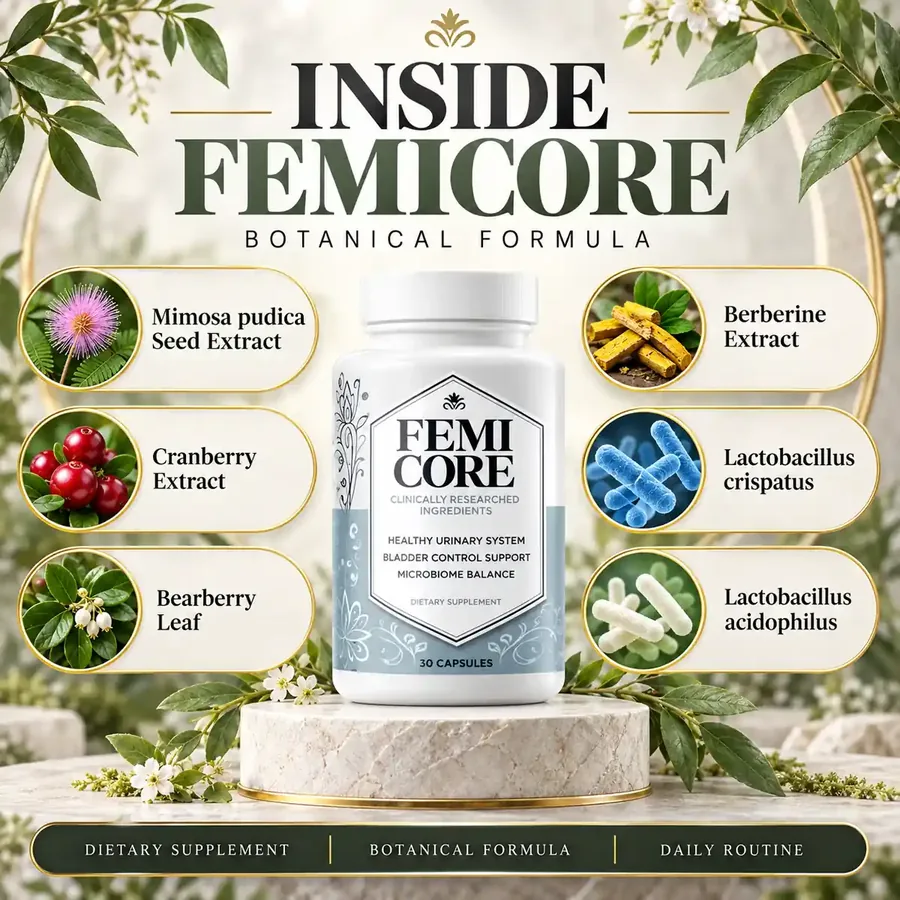
Most other popular ingredients have no cited human data at all in our sources. The table below places FemiCore's nine label lines against that background.
| Label line | Place | Per capsule | Amount used in research | Evidence |
|---|---|---|---|---|
| Mimosa pudica Seed Extract | Herbal 1/4 | at most 350 mg | No human dose found in public health sources (NCCIH, Using Supplements Wisely) | No human trial found; no bladder trial |
| Cranberry Extract (Vaccinium macrocarpon)(berry)(std. to 30% proanthocyanidin) | Herbal 2/4 | at most 175 mg | Trials tested many cranberry products and doses (50 trials, Cochrane 2023) (Cochrane 2023, cranberries and UTI) (NCCIH, Cranberry) | Moderate: fewer repeat UTIs in some groups; no bladder-control data |
| Bearberry (Arctostaphylos uva-ursi)(leaf) | Herbal 3/4 | at most 116.7 mg | EU traditional use: adult women, no longer than one week (EMA, Uvae ursi folium (bearberry leaf)) (NIH LiverTox, Uva Ursi) | Traditional use only; no clinical studies of bearberry leaf alone |
| Granular Berberine Hydrochloride Extract 8% (bark/root) | Herbal 4/4 | at most 87.5 mg | No urinary or bladder dose has been studied (NIH LiverTox, Berberine) | No bladder or urinary trial found |
| Lactobacillus crispatus LCr86 | Strain 1/5 | at most 50 mg | One registered trial gave 10 billion CFU a day orally (vaginal outcome) (ClinicalTrials.gov NCT06830122, LCr86) (Ravel et al. 2011, vaginal microbiome) (NCCIH, Probiotics) | Strain trial completed; no results posted |
| Lactobacillus acidophilus LA88 | Strain 2/5 | at most 25 mg | No published trial found for this strain code (NCCIH, Probiotics) (NIH ODS, Probiotics) | Strain-specific evidence not found |
| Lactobacillus plantarum N13 | Strain 3/5 | at most 16.7 mg | No published trial found for this strain code (NCCIH, Probiotics) (NIH ODS, Probiotics) | Strain-specific evidence not found |
| Lactobacillus gasseri LG08 | Strain 4/5 | at most 12.5 mg | No published trial found for this strain code (NCCIH, Probiotics) (NIH ODS, Probiotics) | Strain-specific evidence not found |
| Lactobacillus casei LC16 | Strain 5/5 | at most 10 mg | No published trial found for this strain code (NCCIH, Probiotics) (NIH ODS, Probiotics) | Strain-specific evidence not found |
Checklist
How do you compare women's urinary health supplements?
Compare them with five questions, asked of every label in the same order.
Are amounts printed?
A proprietary blend prints only a total, and its lines run heaviest first (21 CFR 101.36, supplement labeling). Line k can weigh at most the total divided by k.
Is a standard given?
"Standardized to 30%" says what share of an extract is the marker compound. It does not say how much extract is inside.
Is a cell count printed?
For probiotics, a count of colony-forming units at the end of shelf life matters. Label weight includes dead cells (NIH ODS, Probiotics).
Are strains named?
Probiotic effects are strain-specific, so a species name alone tells you little (NCCIH, Probiotics).
Is the maker named?
Look for who made the product, not only who sells it.
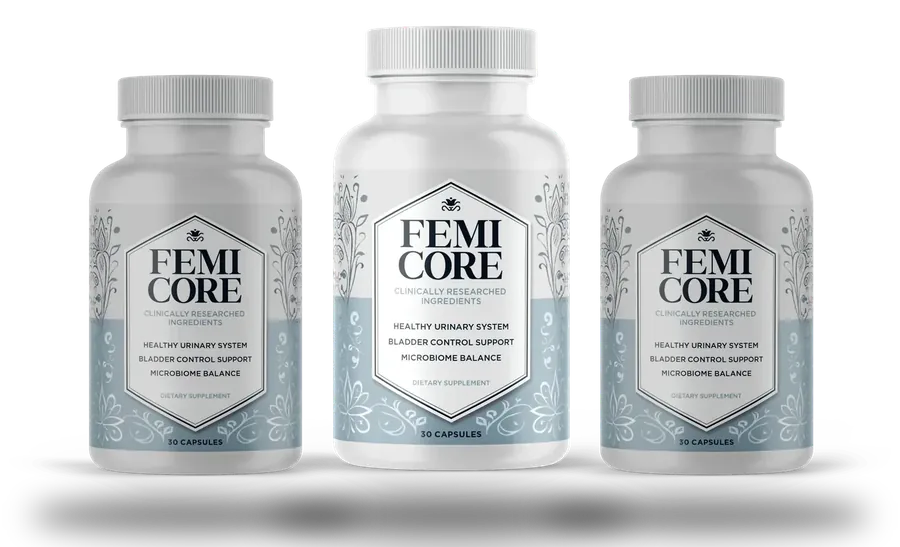
FemiCore: from $49 a bottle30 capsules · 2, 3 or 6 bottles · free shipping on 6 · 60-day money-back guarantee
See packsOne example
How does FemiCore score on that checklist?
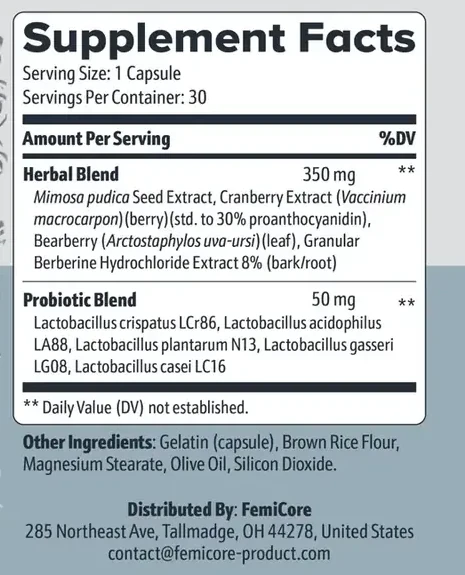
FemiCore passes two points and misses three. It names all nine ingredients and gives codes for the five strains: LCr86, LA88, N13, LG08 and LC16. It prints no single amounts, no cell count, and no manufacturer.
The herbal blend is 350 mg, so the third line, bearberry, weighs at most about 117 mg. The probiotic blend is 50 mg shared by five strains, so the last strain weighs at most 10 mg.
The front says "Healthy Urinary System". No study of the finished capsule is cited, so that wording rests on ingredient-level research only.
Read the Supplement Facts walkthrough for the full panel.
Decide
Should you see a clinician before choosing a urinary supplement?
Yes, if you have burning, fever, blood in urine, or leaks that are new. These need a diagnosis, not a capsule. Keep taking any prescribed medicine as directed.
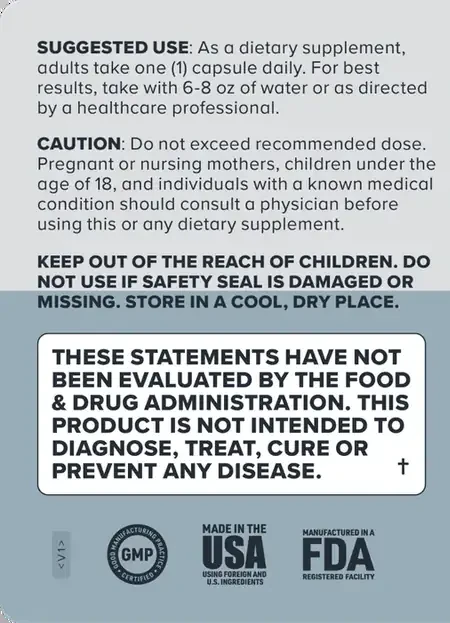
Supplements can interact with medicines and with health conditions, so tell your pharmacist what you take (NCCIH, Using Supplements Wisely). The label asks pregnant or nursing mothers, under-18s and anyone with a known medical condition to consult a physician first.
If you decide to try FemiCore, the sales page shows $79 a bottle on two, $69 on three and $49 on six, with a 60-day guarantee badge.
U.S. stocking partner for FemiCore
Ready to try FemiCore?
Start with a check of your medicines, then pick a pack. Six bottles ship free and cost the least per bottle, and every pack sits inside the 60-day money-back window.
- Secure checkout
- 60-day money-back guarantee
- Ships from the U.S.
FAQ
Urinary supplement questions, answered
Do urinary health supplements work for every woman?
No. Results depend on the cause of your symptoms, and most ingredients lack strong trials. Cranberry has the best evidence, limited to repeat infections in some groups. A clinician can tell you which problem you actually have.
Are there side effects from women's urinary supplements?
Mild stomach upset is the most common report for herbal and cranberry products. Bearberry has a one-week limit in European guidance. Serious signs such as blood in urine or trouble passing urine need a clinician.
Can I take a urinary supplement with a probiotic from another bottle?
It is not established in our sources whether doubling strains helps or harms. Ask a pharmacist before stacking products, especially with weak immunity, where probiotic risks are higher.
Who wrote this
Written and reviewed by
Pages built from the label, the sales page and linked NIH, FDA, FTC, EMA and peer-reviewed sources.
Last updated . See our editorial standards and how we check reviews. This website is run by a U.S. stocking partner for FemiCore, not by the manufacturer or the label's distributor. We are paid when you buy through our order links.
Keep reading
More about FemiCore
U.S. stocking partner for FemiCore
Ready to try FemiCore?
Start with a check of your medicines, then pick a pack. Six bottles ship free and cost the least per bottle, and every pack sits inside the 60-day money-back window.
- Secure checkout
- 60-day money-back guarantee
- Ships from the U.S.